I want to wake up

I want to wake up in a world
where nobody puts flags on their lawns
where breakfast is communal
where children play hopscotch in Congress

I want to wake up where the rich
are not afraid of the poor
and the poor are not ashamed
and everyone has dirt between their toes

I want to wake up where doctors
hold office hours on the street
where libraries fireproof their books
and mothers make the laws

I want to go to school
where boat building is on the curriculum
astronomy is taught by poets
and philosophy taught by day laborers

I want to wake up where
only comedians have straight faces
and the laughter of women
is our national anthem

I want to wake up in a world where
no one has wine until everyone has water
where mosquitos forget how to mate
and Haiti is again the Garden of Eden

I want to wake up where no
one crossing a river gets caught in barbed wire
cowers under drones or
suffocates under broken concrete

I want to wake up in a world
where bullets are composted
the meek fly in first class
and there is always room at the inn

I want to wake up in a world where
mercy is more than a speech by Portia
where judges are quick to forgive
and lethal injections are obscene

I want to wake up where farm workers
eat in fine restaurants
and those who frame houses
live in them

I want to wake up where
three sisters dance in the garden
blue potatoes sleep in the soil
and tomatoes ripen before our eyes

I want to wake up in a world
where the young explore the universe
but come home after six days
to light the Sabbath candle

I want to wake up in a world
so distant from our own
so close to our own

Close your eyes
Open them
Step through

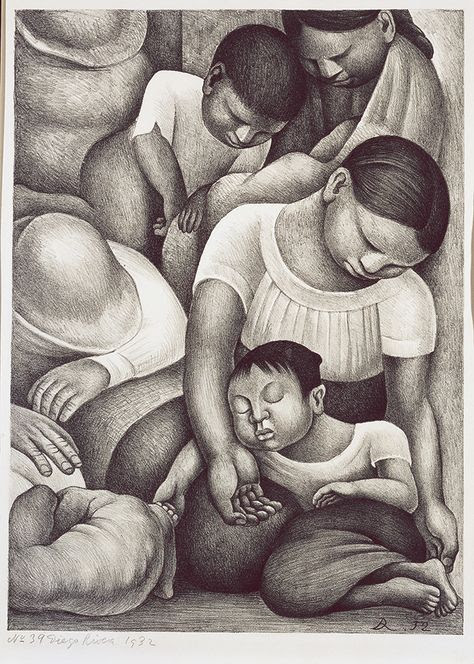
Art: El Sueño. lithograph

by Diego Rivera, 1932
A Happy Convergence

Autumn has passed now, and the trees are barren. Fall colors have given way to a winter spectrum of blacks and whites, grays and browns. It’s the season when the sky grows bigger, the horizon lower, when what was once hidden by foliage comes into sight.

Over at Stone Zoo, it’s easier to catch a glimpse of the Mexican gray wolves as they slip between the trees on the hillside. And the snow leopards on their ledges. I also look for the arctic foxes, now in their white coats for the season.

And if you walk up Cowdrey Street onto Farm Hill, as I sometimes do, you can look out over Stoneham to Winchester and Woburn. If you climb the tower on Bear Hill in the Fells, you can see Boston and the shimmering sea beyond.

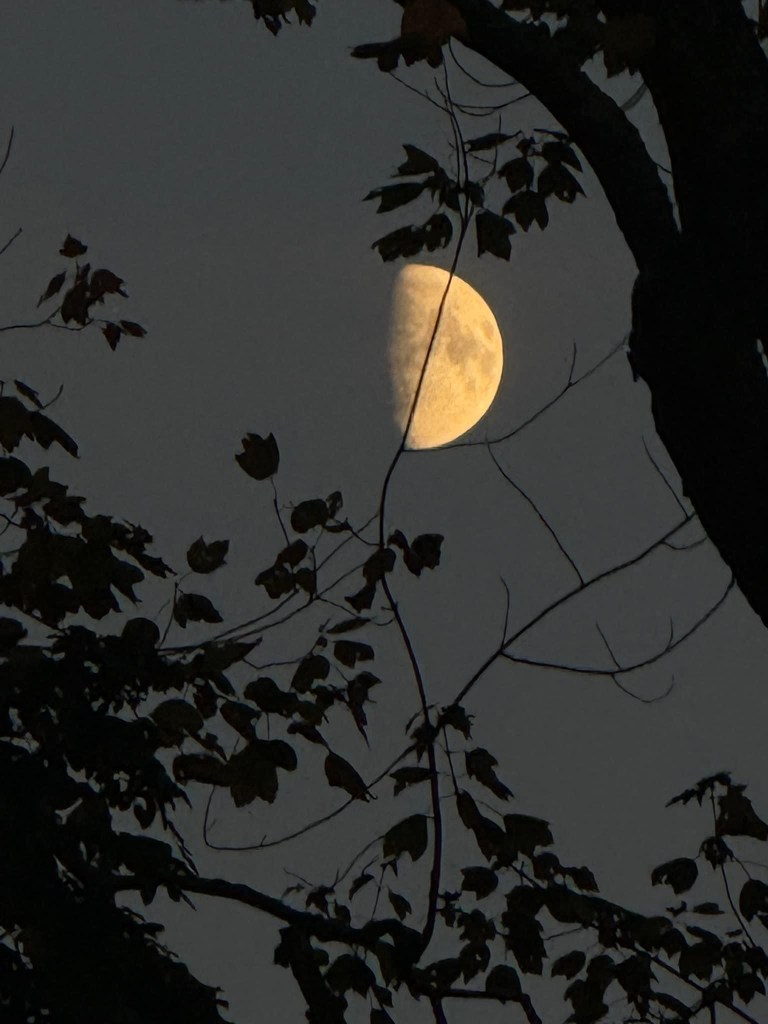
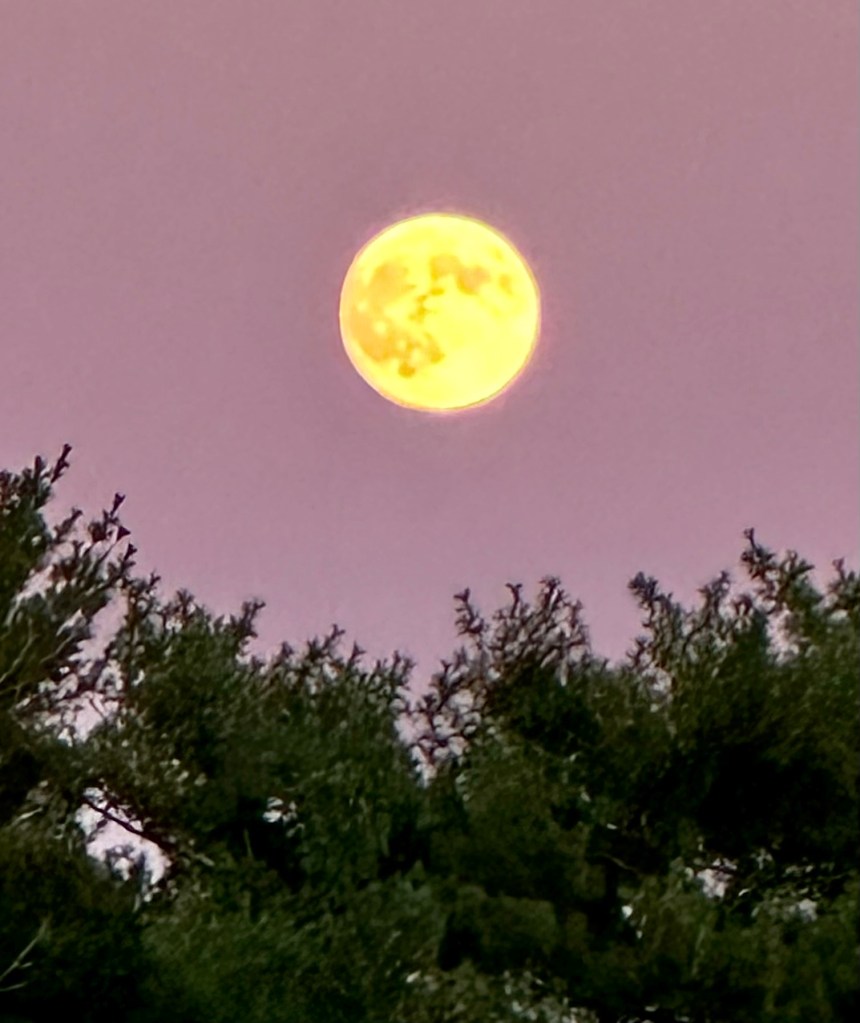
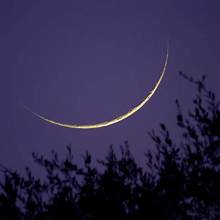
Stoneham’s hills are a good place to see sunsets, the evening planets, and the new moon.

Living for many years in the Southwest, where clouds are rare, I grew accustomed to the presence of the moon. Like the agrarians of old, I slipped into a lunar calendar, feeling hopeful at the slivered new moon, happy in its fullness, and wistful with its waning.

Even though the Western world moves mostly in solar time, the lunar calendar is embedded in our observance of special days. Easter falls on the first Sunday after the full moon following the vernal equinox. Passover, the 15th day of the month of Nisan, begins at the full moon. I think of the Hebrews fleeing Egypt. Nice to have light in the night sky.

Hanukkah, with its hopeful lights, carries us through the last quarter of the moon, when the sky is darkest.

Although the Jewish calendar follows the lunar cycle, every three years an extra month is added, keeping it close to the solar year.

Many Asian cultures observe a lunar calendar. China’s traditional calendar is lunisolar, that is, combining lunar and solar cycles. New Year occurs between January 20 and February 20.

This year we have a happy convergence of lunar and solar time, coinciding with our winter holidays. We started December with a new moon, which becomes full this weekend, December 14-15. Then it begins waning, so that by Christmas we will see but a thin crescent, early in the morning. After this, the moon will go dark as we pass through long nights before it returns with the New Year.

This dark period also coincides with the winter solstice, a solar time marker, and with Hanukkah, a lunar holiday, which, like Passover, is a “movable feast.” Hanukkah, also called the Festival of Lights, begins on December 25, and extends through the moon’s dark phase. On each of the eight days of Hanukkah, a candle in the menorah is lit, marking the miraculous lighting of the temple lamp, even though there was no more lamp oil. The holiday concludes, just as the new moon reappears in the sky.

In the Genesis creation story the heavenly lights were established “to divide the day from the night [and] for signs, and for seasons, and for days, and years.”

And so it is today. Winter is a good time to look around. The leaves are down, the nights are long, and the stars are bright.

May the lights shine for you, this holiday season.

First photo by Rob Pettingill, http://astronomy.robpettengill.org/

Second and third photo by Jeanne Craigie, Stoneham’s Eye on the Sky