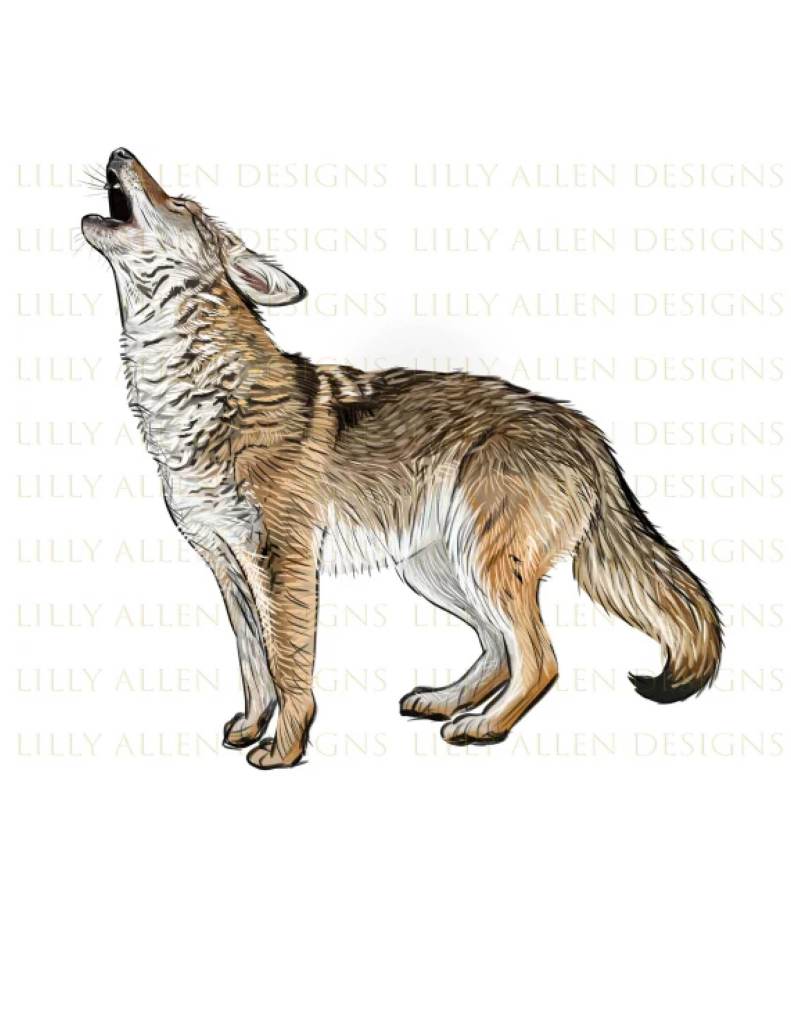
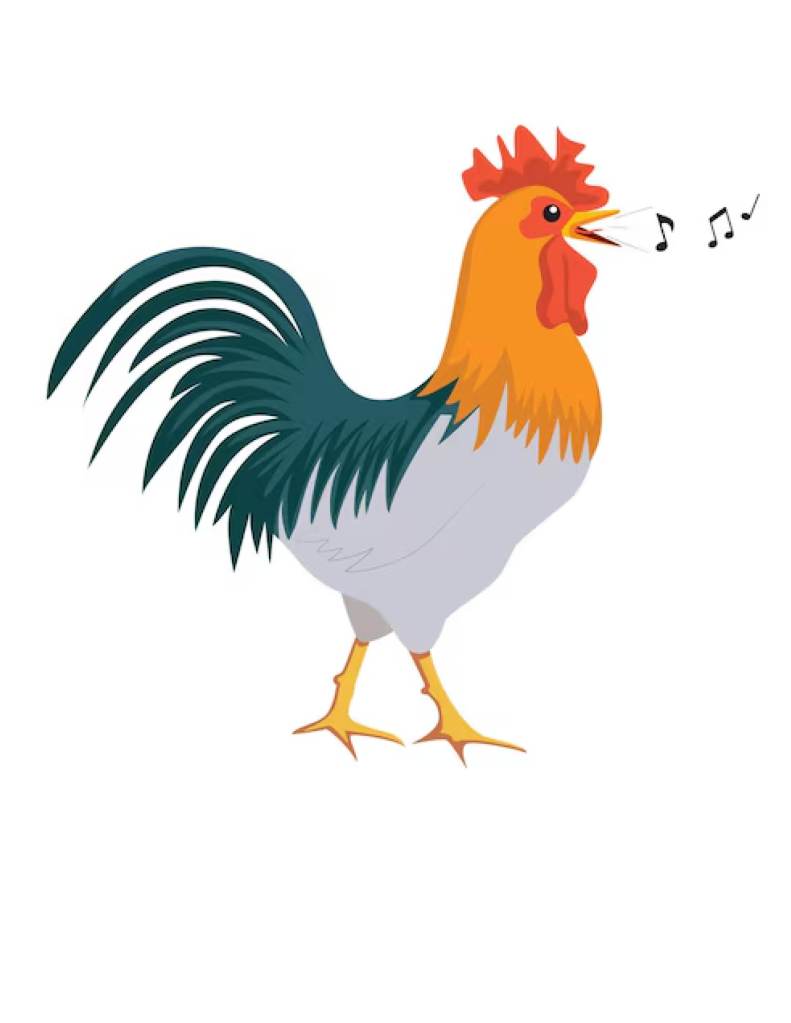
One of my grandchildren’s favorite stories is The Rooster and the Coyote. The story comes from the Hopi people in Arizona, and it’s been passed down orally for centuries. In many Native American stories, the Coyote is a trickster, outsmarting others and causing trouble. But in the story of Coyote and Rooster, Coyote competes in a contest that reveals him as little more than foolish. In this fable I find wisdom for our time. Yes, even for us adults.
So here it is, as I remember it.
Coyote and Rooster were sitting by the fire one night on the mesa. As the long night wore on, first Coyote, then Rooster, began to sing. Each had a vibrant, clear voice, pleasing to listen to.
Coyote, however, was sure he was the better singer, and so he said to Rooster: “You have a good voice, my friend, but clearly my singing is better.”
Rooster, however, insisted that he had the stronger voice, and to illustrate, he let out a soaring refrain.
Then Coyote answered with a long, melodic trill.
Rooster, however, was not impressed. “Clearly the voice of an amateur,” he said, turning one eye on Coyote.
“All right,” said Coyote, “let’s have a contest. Each of us will sing, one after the other, until it becomes clear who has the most powerful voice.”
“Agreed,” said Rooster.
For the next few hours the night above the mesa was full of song. First one would sing, then the other. Back and forth, neither Coyote nor Rooster backing down.
But as the campfire burned down to embers, and the stars shifted in the sky, a faint light seeped onto the eastern horizon. By now, however, Coyote’s and Rooster’s throats had become sore and scratchy.
Coyote could only make weak yipp-yapping sounds. And Rooster, whose voice once soared on the wind, could only make raspy, screeching sounds.
Still, Coyote and Rooster would not let up. Finally, although exhausted, Rooster let out a loud, desperate cry.
Just then, on the ridge to the east, the sun began to rise. Rooster held himself up, weak but proud. “Did you see that?” he said.
“Clearly,” Coyote conceded, “your voice is indeed powerful.”
Ever after this, Rooster has strutted around with great pride, the way roosters are known to do. And no matter what Coyote says, he is certain that he is the one who brings the sun into the world.
After I’ve finished telling this story to my grandchildren, I sometimes ask: do you know anyone like the Rooster and the Coyote?
Cleve would forget he’ d told me about the squaretail, the brook trout he’d caught as a boy on the farm in Wiscasset, Maine, and tell me the story again. He must have told me twenty times. But I’d let him tell it again. I didn’t mind. He had given me my first fly rod, and I figured I could spare the time.
I never fished much as a boy. But soon after I married Cleve’s daughter, I started going with him and Morrill, my brother-in-law. My job was to run the boat, to put it where my in-laws could cast.
We often fished the Rangeley Lakes region, from Beaver Mountain to the Little Kennebago River. On any given day, while fishing we might see deer, otters or a beaver. Or a heron, osprey or kingfisher. Sometimes a pair of loons would surface and we’d be serenaded by their throaty calls. Once, in a stream, we heard splashing ahead. Pretty soon a young bull moose came around the bend and walked past us, not ten feet away.
The thing about brook trout is that once you catch one, other fish look ugly. Brookies, or squaretails, are small trout in general, but their sides are prettier than a church window. Their minute scales are flecked with yellow and red spots, sometimes with blue haloes. When spawning, males have orange-red sides and bellies.
Eventually, I got tired of steering the boat so my in-laws could fish, and I picked up a spare fly rod. “Put on a number 12 Hornberger,” Cleve said. That done, I started whipping the line back and forth. First I snagged it in the alders, then on Morrill’s hat. “Easy, now,” he said.
After a good deal of practice, I dropped the fly gently down on the surface and got a hit, then lost it. But at the mouth of the brook, now fishing the Hornberger wet, I brought in my first catch. I stared in amazement at the eight-inch brookie in my hand.
That autumn, after the fishing season, Cleve had a massive stroke. He lay on the hospital bed in Maine Medical Center, unable to move. Then one day I saw his thumb twitch. Miraculously, and with intense will, not to mention speech and physical therapy, he came back, but not all the way.
In the winter months I played Cribbage with him, making small talk as he struggled to shuffle and deal. By spring he was doing much better. He had learned to sign his checks with his left hand. He was also learning to drive again. He never got his fine-motor movement back, so important to fly fishing, but that didn’t keep him from trying.
In July we I asked Cleve if he was ready to go fishing again. Morrill and I helped Cleve off the dock into the boat. We crossed the lake, entered the stream, then drifted toward our favorite spot. All three of us began casting, but when Cleve hooked one, I quickly reeled in and turned to assist. He brought his fish slowly to the boat, just the way you’re supposed to. “Get the net,” Morrill called out. But I didn’t like using nets, and I reached down to gently lift the brookie in for him. Coming out of the water, the trout leaped in an arc and was gone. If it had been my fish, I would’ve cursed. “There’ll be another one,” was all Cleve said.
In later years, the fish Cleve liked to talk about, more than the salmon or togue, more than the grayling and pike he had caught out in Minnesota, was the 15-inch squaretail he caught when he was a boy, in the stream that wound through the farm before dropping into the Sheepscot River.
At dawn one Sunday morning, he had grabbed his rod and a few night crawlers and headed for the bend where the stream pooled deep. His timing was right. He caught a couple of nine-ten-inchers. Then he crawled out on a tree that bent over the pool and dropped his line straight down where the water was black.
The sudden tug almost pulled him off balance. He inched back down the trunk, then patiently tired the fish before sliding him up on the bank.
It was a beautiful trout, deep in color and thick as a man’s fist. He gathered his trophy and the other two on a string, ran up to the house, knocked on his father’s bedroom door and walked over beside the bed. Tapping his father on the shoulder, he first held out the two smaller trout.
His father squinted at the fish, then rolled over. “Now, how ‘bout this one?” the boy held out the large brook trout. This time his father in one motion swung his legs out from under the bed covers. This was a squaretail worth looking at.
Word got out at church that morning about the boy’s fish, and that afternoon Cleve’s uncle drove over from Damariscotta. “Show me your trout,” he told his nephew. “Too late,” Cleve said. “We et him for lunch.”
Over the next few years, Cleve had a series of smaller strokes and setbacks. But often, when the talk died down, or our thoughts turned to the upcoming season, Cleve would ruminate on that trout. He’d say, “Did I ever tell you about the squaretail I caught in the stream on the farm?”
I figured that trout—rich in symbol and pride—had helped my father-in-law through the hard times , the heart attack, the strokes, the long hours of therapy, the loss of his wife, the loneliness of hospital nights.
A year later, Cleve started losing his memory, or rather began returning to another time. Sometimes he’d get up a 3 a.m., get his things together and announce it was time to go home. One day when we took him out for a drive to town landing, he said he wanted to go home. But when we headed for home, he said it wasn’t the right way.
Eventually he had to go to a nursing home. One of the last times I visited with him, he was waiting for his parents to pick him up.
It’s hard having a conversation with someone with dementia. You want so bad to connect, for yourself as well as for them.
As I sat beside him in his wheelchair, there were no more words. Then I thought of asking him about the brook trout. “Do you remember the squaretail, Dad? The one you caught when you were a boy on the farm?”
He looked at me for a moment, patiently, I thought. Then he said, simply, quietly, “No.”
I was stunned. Something inside him had let the fish go. I grabbed desperately for the net. It was too late. That magnificent trout, beautiful as a Monet, had simply snapped the leader drawing it to the surface and turned back in a silent rush to the pool’s depths.
A month later, Cleve, too, entered that dark pool. I like to think he found the squaretail again. That his eyes once again lit up at the beautiful colors. But I don’t know. These things are hard to tell.

 Ben Jacques Stories