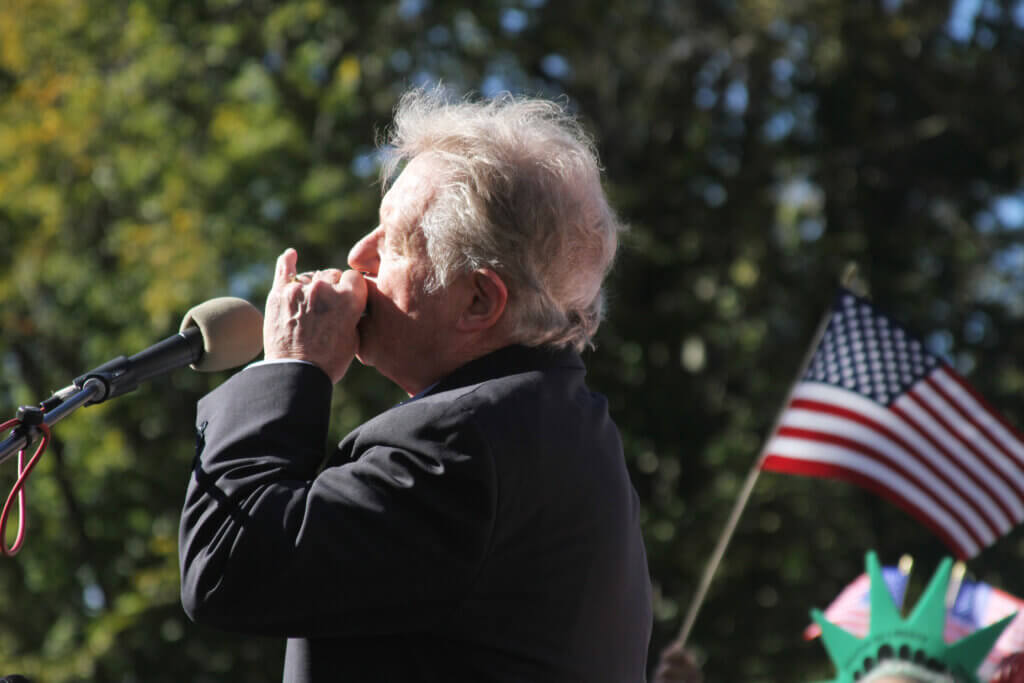
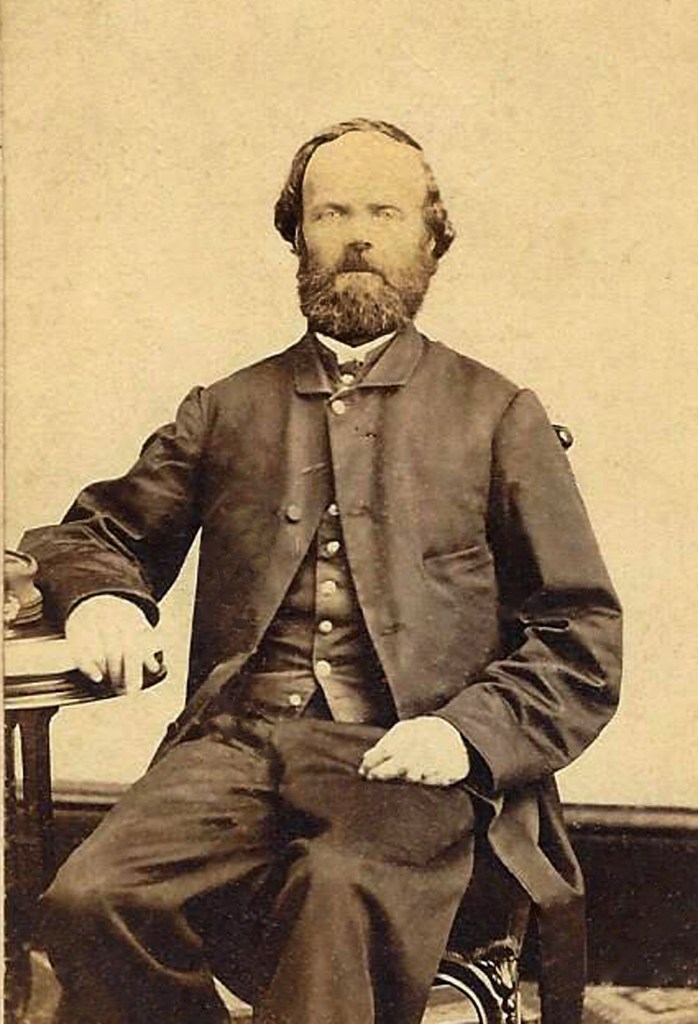
Listening to Jimmy Tingle Saturday as he emceed the No Kings protest/rally on the Stoneham Common, I couldn’t help but think of a 30-year-old preacher in the white church rising up behind him. The year was 1850 and the preacher was the Rev. William Chalmers Whitcomb. On a cool morning in November, he stepped into the pulpit and preached a fiery sermon that called on parishioners to follow God’s law rather than the law of the land.
Then as now, the country was divided. Congress had just passed the Fugitive Slave Act, mandating the return of all former slaves to their owners. State governments, local law officers, and even citizens were called on to aid in its enforcement. The law imposed stiff penalties of imprisonment and fines for anyone sheltering fugitives.
The Fugitive Slave Act tore apart families, towns, political parties and churches. The governor, most legislators and civic leaders supported it. Even Daniel Webster, the esteemed Massachusetts senator, now secretary of state, hailed the federal law as the best way to keep Southern states from bolting.
In Stoneham abolitionists had met with fierce opposition. The host of the first recorded meeting in town, attended by William Lloyd Garrison, was told his house would be burned down. In a fight after an abolitionist meeting at Town Hall, a 37-year-old man—husband and father of three—had been stabbed to death.
Although abolitionist sentiment was growing, by 1850 most ministers either remained silent or spoke in favor of the federal law. Not so the new minister in Stoneham.
“I make no apology” for speaking on this subject, Whitcomb told the people of Stoneham. He only regretted that he had not spoken out sooner.
He began by citing the Old Testament book of Deuteronomy, Chapter 23: 15-16: “Thou shalt not deliver unto his master the servant which is escaped from his master unto thee: He shall dwell with thee, even among you, in that place which he shall choose in one of thy gates, where it liketh him best: thou shalt not oppress him.”
In defiance of the federal law, Whitcomb called on his congregation to “Hide the outcast or help him on his journey to a safer place, even though you may risk personal security, property, and life.”
The Stoneham minister urged nonviolent action based on the principle of love. “Shed no blood,” he said. “Wield no weapons but those of truth and love. Use no arms but those God hath given you.”
Fast forward from the church across the street to March 28, 2026, as some two thousand citizens packed the Stoneham Common to protest the federal government’s policies and actions. It was the third national No Kings Day with massive demonstrations geared to stopping the rise of authoritarianism in the United States. Participants protested the war in Iran, the violence of ICE, interference in elections, the targeting of immigrants and LGBTQ+ and attacks on First Amendment rights.
Choirs sang, leaders rallied, a guitarist soloed, protestors chanted, while throughout Jimmy Tingle inspired and entertained the throng with his passion and wit. Pulling a harmonica from a pocket, he opened with a reedy version of the National Anthem. The harmonica reappeared later, when in closing, Tingle told the story of John Newton, the one-time slave trader who repented and became a leading abolitionist. He then played the hymn that Newton wrote, “Amazing Grace.”
I couldn’t help but think, as we left the Common, some to continue to the Boston Common for the 1 p.m. rally there, that Rev. Whitcomb would have been proud.

 Ben Jacques Stories