The Children Know the Way

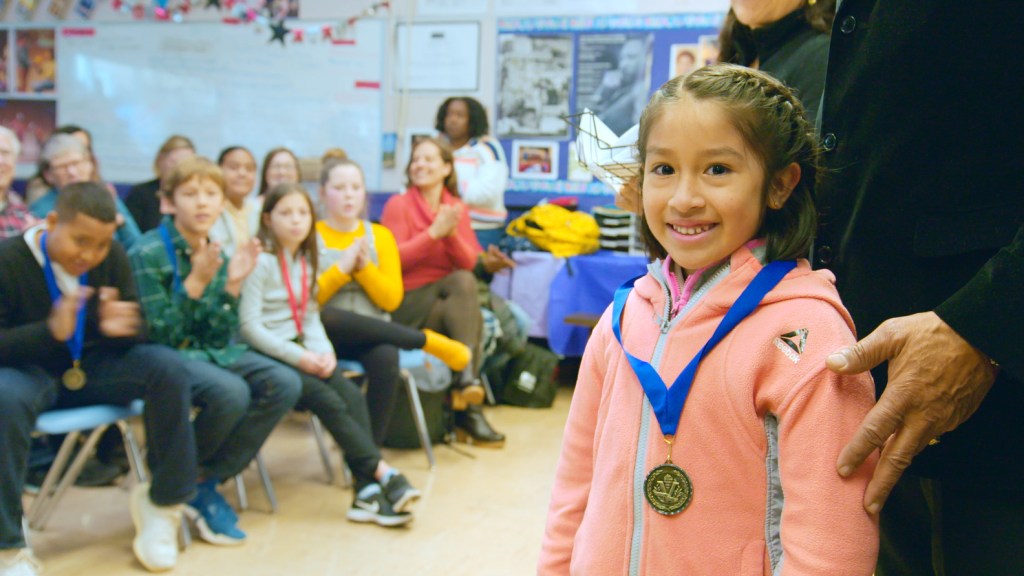
Photo courtesy of HBO

If we are to find our way through the current moral and political crisis, we should pay more attention to our children.

That’s the message I got on Monday as Becky and I watched the HBO documentary, “We are the Dream: The Kids of the Oakland MLK Oratorical Fest.”

The film was shown at the Stoneham Public Library, which opened on the holiday just for the screening in commemoration of Dr. Martin Luther King, Jr. It was sponsored by our town’s Human Rights Commission.

“We are the Dream” tells the story of the children of Oakland, California, who compete in the annual MLK Oratorical, culminating in a remarkable presentation celebrating the life of the beloved civil rights leader.

In the film, the students, K-12, bring to life the words of Dr. King and others—poets, artists and activists. Sometimes, they perform their own compositions. We see them as they prepare, rehearse and take the stage.

Oakland, California, is a city of some 440,000 residents. Like San Francisco across the Bay, it is a consortium of races and ethnicities, with no one group a majority. Hispanics comprise about 30 percent, Whites 26, Blacks 20 and Asians 15. About 10 percent are listed as bi-racial, and there are smaller numbers of American or Hawaiian natives and Pacific islanders.

Which is to say, when you walk into Oakland’s schools, you will find the America envisioned 68 years ago in Dr. King’s “I Have a Dream” speech. You’ll see Black kids holding hands with White kids and Asian kids singing with Latino kids. You’ll find immigrants from around the world–from South America to Southeast Asia, from the Middle East to Eastern Europe.

Like most urban centers in the United States, Oakland struggles with issues of poverty, housing shortages and homelessness. What Oakland has demonstrated, however, is the that all races can live and work together and that diversity, equity and inclusion are essential American values.

What the HBO film shows us is that in a country still struggling with hate and division, we can create better. That’s the message of the children, and why we must pay attention.

In Stoneham, as well, we must pay attention to our children, those in our schools, clubs and churches, those like the young people at the Boys & Girls Club who gathered on Monday to thematic mural at the Teen Center on Central Street.

Have you noticed that children don’t get tied up in political and philosophical rationalizations? Most kids are quick to tell you what is right and wrong. They have an innate sense of fairness, and they know who the bullies are. They know violence is not the answer. As one second grader in Oakland said of the late civil rights leader, “Dr. King showed us how to fight without using our fists.”

Children know you don’t steal another person’s candy or their country. Or their dignity by calling them names. And you don’t shoot people who are getting in your way.  

On this national holiday, the children call on us not to forget the dream of Martin Luther King. This dream, our children are showing us, can restore our spirit and renew our strength. It can lead us to renew our commitment to the “beloved community.”

Note: As we often spend time in Oakland during the winter, and as our son, who was director of academic programs for Oakland schools, was helping with this project, I was asked to fill in as one of the contest judges.. It just happened to be the year that HBO made the documentary above. 
What’s Happening to Our Language?

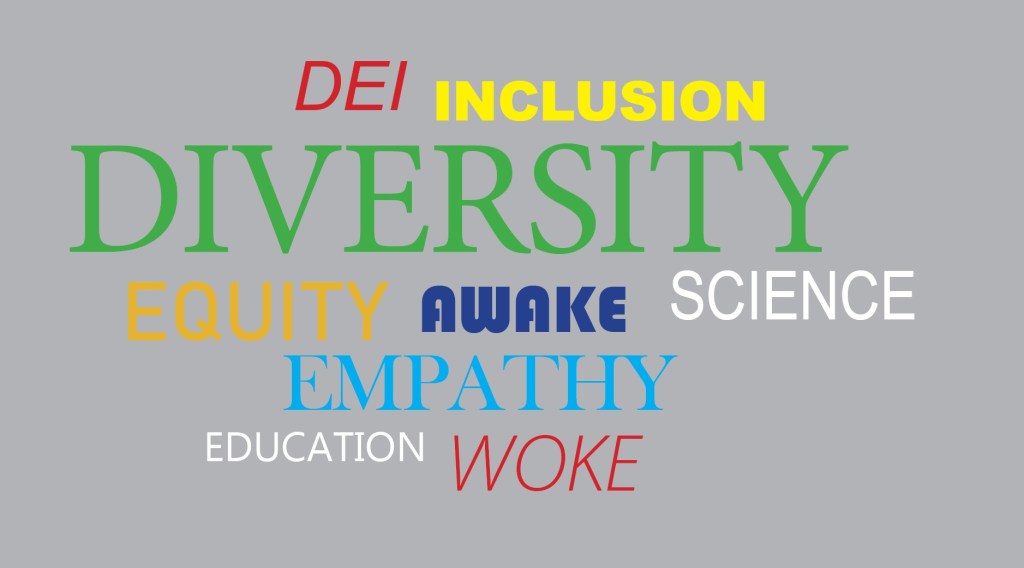
I was wondering about this when I heard that federal and school programs labeled as DEI—that’s diversity, equity and inclusion—are being defunded.

I’ve always been taught that diversity, equity and inclusion are good things, that they are fundamentally American things. DEI has made us who we are, a nation of and built by immigrants, unlike any other, “dedicated to the proposition that all men are created equal.”

As Americans, we brag about our diversity—our inventors, scientists, athletes, musicians and artists. Without diversity, we become a monoculture, and monocultures aren’t healthy, as all farmers know. Monocultures may bring quick profits from scale, but leave the soil depleted. Cotton, for example. Or potatoes. Reliance on one variety of potatoes in Ireland led to disease and starvation.

It’s the same with people. Homogeneous societies flourish for a time, then grow stale. Institutions lose their vitality. Birth rates decline. Meanwhile, societies that welcome diversity, that plan for diversity, advance, benefiting from the rich cross fertilization of talents and ideas.

DEI is also expressed in our religious beliefs. We celebrate a God who creates diversity, who loves all equally, and leaves no one out.

So, what’s up with this anti-DEI stuff?

Other words long considered positive, like “science” and “education,” are also suspect. It’s becoming dangerous to look at things too closely, like climate, for one. Or history.

Which brings us to the word “woke.” Despite its mainstream use today, it’s been around for at least a century. It stems from African-American vernacular, meaning awake. It was used to describe those with a heightened awareness of social and political issues, especially race and inequality.

Today it’s used in derision. To be woke is to be part of the radical left, if not communist. You are “woke” if you advocate for minorities, including women and LGBTQ. You are woke if you teach your students how to think critically. You are “woke” if you pay attention to global warming.

Then there is the word “empathy,” a necessary capability for living in community. Without empathy individuals look out only for themselves. They ignore the suffering of others and tolerate systems of abuse. Yet, even this word has taken on negative connotations.

According to the political right, having too much empathy, or empathy for the wrong people, is a problem. It’s called “toxic empathy.” When the Rev. Bishop Mariann Edgar Budde at the National Cathedral on Jan. 21 called on President Trump to have empathy for immigrants and LGBTQ community, she was accused of expressing toxic empathy.

I recently visited a web site that offers support for those suffering from toxic empathy. Having empathy can be stressful and wear you out. It can keep you from taking care of yourself.

The underlying message is, learn to control your empathy. Unchecked, it will deter you from your own goals and may bring you into conflict with your religious or political beliefs.

Meanwhile, some words considered bad are now heard as good. Tom Homan, Trump’s deportation enforcer, talks of “bringing hell to Boston.” Trump tells his supporters, “I am your retribution.” He calls African countries “shitholes,” and women who oppose him, “nasty.”

No wonder public discourse has become so polluted.

Words are important, as is the way we use them. I propose that we continue to celebrate DEI, diversity, equity and inclusion. And that we make it our business to stay woke, that is, awake to the world around us. As for empathy, we need it now more than ever.