Woodie Guthrie wrote the lyrics. Martin Hoffman set them to music. Since then, it’s been sung by Bob Dylan, Joan Baez, Johnny Cash, Dolly Parton, Bruce Springsteen, Pete Seeger and Arlo Guthrie.
It’s a ballad called “Deportees” and it tells of an airplane crash in California’s Los Gatos Canyon. On board were 28 migrant farm workers from Mexico.
The lyrics are as searing now as in 1848 when Guthrie wrote them:
The sky plane caught fire over Los Gatos Canyon, A fireball of lightning, and shook all our hills, Who are all these friends, all scattered like dry leaves? The radio says, “They are just deportees.”
Guthrie wrote the ballad one night after news reports listed the names of the pilots, attendant and immigration guard lost in the crash, but referred to the farm workers only as “deportees.” After the braceros’ bodies were recovered, they were buried in a mass grave without names, marked “Mexican Nationals.”
The roundup of the Los Gatos laborers was just one episode in several government campaigns to remove Mexicans and those with Mexican ancestry. Mass deportation began in 1930 and continued through the Great Depression. Then in 1954, the Immigration and Naturalization Service (INS) brought out “Operation Wetback.” Under this federal program, officials used strong-arm tactics to arrest tens of thousands of immigrants across the country. Caught up in the raids were farm and factory workers, including American citizens.
In July of 1955, several thousand deportees were found wandering the streets of Mexicali, a desert town bordering California. Yanked from their jobs and families, they had simply been dumped across the border. According to one account, 88 died of heat exposure in the 112 degree heat.
In Texas, thousands of deportees were crammed onto boats bound for Mexican ports. Testimony before a Congressional committee described conditions akin to those on slave ships. Other immigrants were packed into trucks. By the end of Operation Wetback, the INS claimed it had “repatriated” 1.3 million Mexicans.
Goodbye to my Juan, goodbye, Rosalita, Adios mis amigos, Jesus y Maria; You won’t have your names when you ride the big airplane, All they will call you will be “deportees.”
Accompanying the mass deportations were media depictions of Mexicans as dirty, disease-bearing and lazy. News coverage focused on border and immigration officials conducting raids.
Only in time did most Americans come to see this as something shameful. In a 2012 ceremony in Los Angeles, Governor Jerry Brown and Mayor Antonio Villaraigosa formally apologized for California’s role in the deportations.
On Labor Day in 2013, United Farm Worker President Arturo Rodriguez joined hundreds gathered at the Holy Cross Cemetery in Fresno, California, to memorialize the 28 farm workers killed in Los Gatos Canyon. They were 25 men and three women. This time, inscribed in the headstone, was each person’s name.
Now, deportation planes are again in the sky. Planes to El Salvador, Guatemala and Honduras. Planes to India and Rwanda. Planes to Eswatini, a tiny country in southern Africa.
Through October 2025, the Department of Homeland Security operated 1,701 deportation flights to 77 countries. And it recently bought six Boeing 737s, expanding capacity.
Meanwhile, 66,000 men, women and children await deportation in detention centers. Arrested, often with brutal force, they were tracked down in streets, courthouses, parking lots, fields and construction sites.
Some of us are illegal, and some are not wanted, Our work contracts out and we have to move on. Six hundred miles to that Mexican border, They chase us like outlaws, like rustlers, like thieves.
Compared to programs of the past, Donald Trump’s campaign is Operation Wetback on steroids. The president wants 3,000 arrests a day, or one million by the end of his first year in office. Each day, it seems, he expands his list of targets, Somalis, Haitians, Venezuelans, Afghans. What they have in common is their darker shades of skin.
As I listen to Woodie Guthrie’s song, I think of my children and grandchildren. I wonder, what song will they sing in years to come? Who will write the words, and who will remember the names?
Will there be, one day in the future, a public apology, a ceremonial mea culpa for the cruelty, the harm inflicted on so many? If so, what song will we then sing.
In the darkness before dawn, a man from Georgia is riding in the baggage car of a northbound train. He is exhausted, and to keep awake, he opens the window. Cold air rushes in. Just then the engine whistle sounds, and sticking his head out the window, he sees the flickering lights of Philadelphia. It is Christmas Eve, 1848.
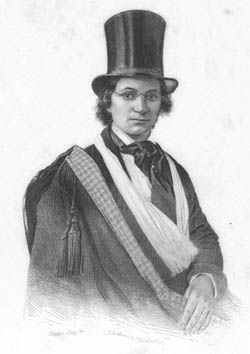
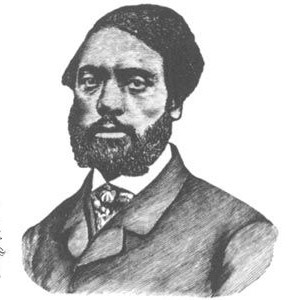
The traveler is a 24-year-old slave named William, on a journey with his master, “Mr. Johnson,” a young gentleman from Macon, traveling north for medical care. But things are not what they seem. In fact, Mr. Johnson is Ellen Craft, a tall, light-skinned African woman, cross-dressed as a plantation owner. And William is not just Mr. Johnson’s slave, he is her husband.
Allowed to marry, Ellen and William have avoided having children, shuddering at the prospect of bearing offspring who might be taken from them and sold. Their desperation has steeled them to dare an escape, despite the horrendous outcome if they are caught.
Born of a white owner and his African slave, Ellen was taken from her mother at age 11 and given as a wedding present. Now a house slave, she has been granted a few days off to visit her family. William, trained as a carpenter and rented out by his owner for wages, has also obtained permission to be absent from work. Growing up, he has seen both his parents and his 14-year-old sister sold away to pay debts.
Two weeks ago William and Ellen spent the night in Ellen’s cabin, planning their escape route. The distance from Macon to a free state is a thousand miles. For the Crafts, attempts on foot are out of the question. Instead, William and Ellen have decided to escape in plain sight, that is, in disguise. Using money saved from jobs on the side, William has been buying pieces of men’s clothing a young gentleman would wear. Ellen, a seamstress, has sewed a fine pair of trousers. She has locked the clothes in a little chest of drawers William made for her. The last thing William bought for his new “master” was a pair of green-tinted spectacles. They will leave on December 21.
The night before, William and Ellen spend the hours talking, asking, what if, and what should we do when? There is a major problem. At every train or customs station, Ellen will be required to sign a register, or to show papers. And she, like her husband, is illiterate.
Ellen has an idea. She will tie up her right arm in a sling, so she will not be asked for her signature. Further, to discourage questioning, she will have bandages with a poultice wrapped around one side of her head.
Just before dawn on Dec. 21, William takes out Ellen’s scissors. Standing behind her like a barber, he cuts her hair. Then he helps her into her gentleman’s clothes, complete with top hat. At the door they pause. No one is in the street. They slip out “quiet as moonlight on the water,” William will later recall, and they separate. They meet at the train station.
Their escape is laden with peril. On each leg there is a new challenge. Settling into her seat on the train to Savannah, Ellen is shocked to see a friend of her owner’s, who would know her, take a seat next to her. Feigning illness, she avoids his inquiries and is undetected.
From the Massachusetts Histoical Society. Not to be reproduced without permission.
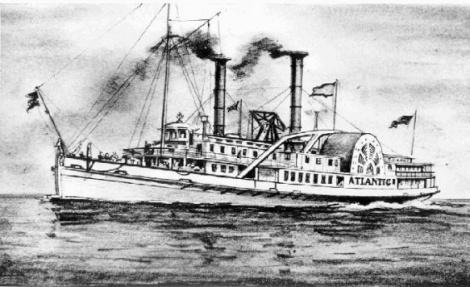
Arriving in Savannah, Mr. Johnson and his slave take an omnibus to the harbor, where they purchase tickets on a steamer bound for Charleston, South Carolina. Going aboard, William helps his master settle into his berth, then goes on deck to find a place to sleep. There are no accommodations for slaves, so he finds a warm place near the funnel on sacks of cotton, resting there until morning.
The next day, as William patiently waits on Mr. Johnson, a vulgar slave trader tries to purchase him from his master. Then a military officer scolds Mr. Johnson for speaking kindly to his slave. “Nothing spoils a slave so soon as saying, ‘Thank you,’” he warns him.
In Charleston, Mr. Johnson and his slave check into a hotel. Here the proprietor is solicitous of the young gentleman’s needs. While his master is served in the dining room, Williams eats off a broken plate in the kitchen.
The next morning, as they prepare to board a steamer to Wilmington, North Carolina, the station officer demands that Mr. Johnson sign the register, despite his apparent injury. Finally, the officer who has come on the same ship from Savannah steps up and vouches for the invalid gentleman. Overhearing this, the ship’s captain signs the register, “Mr. Johnson and slave.”
The next morning William and Ellen Craft arrive in Wilmington, and from there board a train for Richmond, riding in a section reserved for families and invalids. Here they are joined by an older man and two daughters, who insist on making Mr. Johnson as comfortable as possible, and share advice on remedies for rheumatism. “Papa,” one of the daughters says, “Mr. Johnson seems to be a fine gentleman.”
After the train stops in Richmond, the friendly father and daughters disembark, and a stout, elderly lady takes a seat beside the disguised Ellen. Glancing out the window, she sees William approaching on the platform and cries out, “Bless my soul, there goes my nigger, Ned.”
“No, that’s my boy,” Mr. Johnson replies. When William arrives, the lady confesses she was mistaken, then launches into a diatribe against her run-away slave, and all the slaves she owns. She plans to sell them away to New Orleans as soon as she can.
At Fredericksburg, the Crafts again board a steamer, this time to Washington, D. C. Once in the nation’s capital, they go directly to the train station and board a train for Baltimore.
When the train pulls into Baltimore, it is Saturday evening, Christmas Eve. Ellen and William are exhausted and their nerves frayed. They have expected detection at every step. For three days and nights they have had almost no sleep.
Stepping warily onto the station platform, Mr. Johnson and his slave go to the ticket office and purchase tickets for the final leg of their journey, the night train to Philadelphia.
But something goes wrong. Maryland is still a slave state, and it is illegal for any white man to take his slave into Pennsylvania, a free state, without authorization. After settling Ellen in her carriage, William returns to the platform, but is accosted by the station officer, who forbids him to board.
Returning to the station office, crowded with late-evening travelers, Mr. Johnson demands to know why he, a respected gentleman needing medical care, cannot take his faithful slave with him on the train to Philadelphia.
Ellen’s insistence turns to pleading, but to no avail. Have they come so far, only to be arrested as fugitives? They know well the fate that awaits captured run-away slaves. William has seen them attacked by dogs, whipped, tortured or killed as an example to others. Even if they survive, they will be forever separated, assigned to the hardest forms of labor.
As they wait in agonizing suspense, the train whistle sounds. Just then the train conductor enters the room and calls the all-aboard. Then, as if only by Providence, the station officer relents. Seeing how the young gentleman is in such poor condition, and it is Christmas Eve, he gives permission for the two to pass.
As quickly as possible, William settles Ellen into her carriage, then hops into the baggage car where he must ride. Slowly, in the early darkness, the engine picks up steam and the train pulls out of Baltimore station.
It is now almost five in the morning, and the weary fugitive with his head out the window gazes with fascination at the twinkling lights ahead of him. In the cold wind, tears are spreading on his cheeks, and something is happening he can hardly explain. His body has suddenly become lighter.
With a great hissing of steam, the train comes to a stop in Philadelphia station. William and Ellen wait until all the other passengers have disembarked, then William calls for a “fly,” a horse-drawn taxi, and hands the driver the address of a boarding house he has been told is run by an abolitionist. Here they will find refuge and support for their continued journey north.
Inside the carriage, Ellen leans her head on William’s shoulder and bursts into tears. It is Christmas Day. They are free.
Afterword: After boarding with a Quaker family outside Philadelphia, William and Ellen Craft make their way to Boston, where they are welcomed by the abolitionist community of free blacks and white allies. Here William works as a cabinet maker and Ellen as a seamstress until 1850, when the Fugitive Slave Act imperils their freedom and they flee to Nova Scotia, then England. Over the next 15 years they work, study, lecture and raise a family of four boys and one girl. After the Civil War, they return to Georgia and open a school for the children of former slaves. This retelling of their story is based on their book, published in London in 1860, titled “One Thousand Miles to Freedom.”




 Ben Jacques Stories