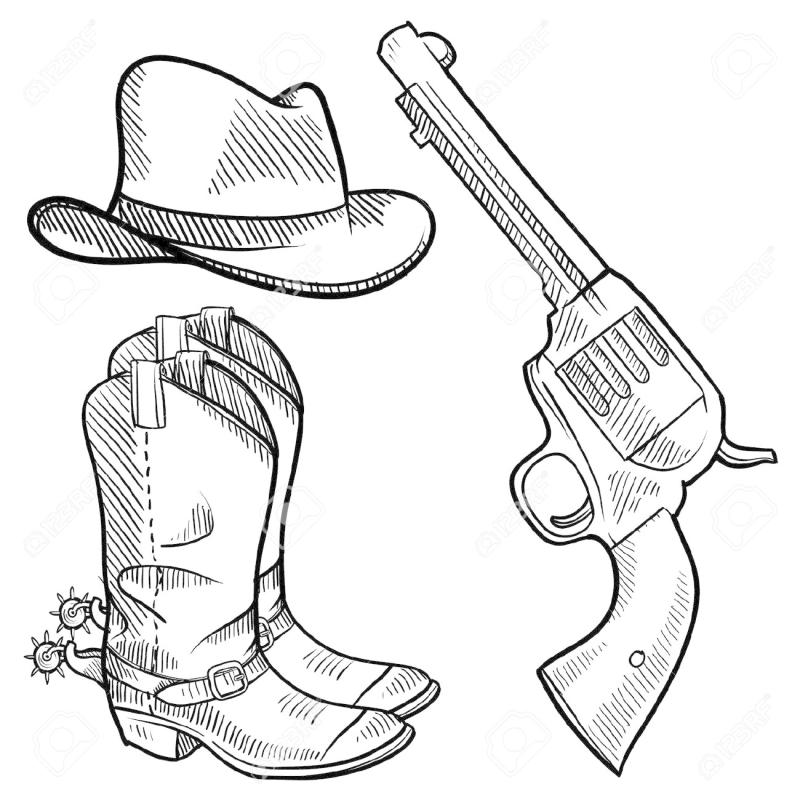
“Bam, you’re dead!”

At age seven I was thrilled by the Lone Ranger. We didn’t have a TV, but the family that rented above us did and invited me and my brothers up to watch on their black-and-white.

Years later, I looked forward to “Gunsmoke,” which my uncle would let us watch with him in the family room. Our hero was, of course, Marshall Matt Dillon, who kept the peace in Dodge City, along with his sidekick, Chester, Miss Kitty and Doc Adams.

Then came Wyatt Earp, Maverick, the Rifleman, Have Gun Will Travel and others. What all the characters had in common was they knew how to solve problems and settle disputes. They did this with their guns.

As did boys did across America, I imagined myself as a heroic keeper of the peace. Our parents didn’t allow us store-bought six-shooters, but we made our own versions out of wood. In my reverie, I was the quickest draw in town.

My fascination with Westerns was an early immersion in a culture wedded to guns. Guns represented power, and the destruction they caused was justified by the need to protect and establish order or to settle old scores.

If our heroes shot and killed other human beings, this was all right because they were clearly the bad guys. We enjoyed seeing their theatrical demise. “Bam, you’re dead,” one of us would yell. “You got me,” the other would respond, spinning and falling to the ground.

Over time, on TV and in movies, the weapons became more sophisticated. Colt 45s and Winchester rifles were followed by .44 Magnums and AR7s. Then came Glocks and M60 machine guns. Star Wars and Jurassic Park brought us Mauser pistols and SPAS-12 shotguns. Today, AK47s are the weapons of choice.

Beyond the arguments over gun proliferation and control in America, and whether our Constitution sanctions unfettered access, is the simple reality that we Americans are in love with our guns. We want them, we have them, and we use them— despite the horrendous suffering they inflict.

This is true on a national scale as well. Too often and too quickly we turn to our weapons—ever more sophisticated—in our cities and in the world. We choose war over defense, “death from above” over mediation and conflict resolution.

Accompanying our threats of violence to our perceived enemies is their dehumanization. Nowhere is this more evident than in the words and deeds of our current commander in chief and secretary of the War Department.

The president who labeled Somalians “garbage” and African nations “shithole countries,” has called Iranians “crazy bastards” and threatened to “bomb them back to the Stone Age.”

Hegseth has taunted Iranians as “barbaric savages” and called for “overwhelming violence of action against those who deserve no mercy.”

When you deny your opponents their humanity, it’s much easier to destroy them. You can shoot protesters in the street. You can blow up boats in international waters, summarily executing suspects. You can conduct a “precision” strike into another nation to arrest its leaders, killing 80 people in the process.

And you can start an unprovoked war, unleashing missiles, bombs and drones that you know will kill and wound not only our own soldiers, but thousands of civilians—including children—their suffering out of sight and out of mind.

After 250 years, will we ever understand the true consequences of our violent impulses, combined with our love of weapons? Will we ever learn to holster our six-shooters and commit ourselves to making peace? God help us.

A family reunion and the shadow of history

This summer when our cousins, the Haegelens, arrived from Germany, east and west came together. Irina grew up in a village in Siberia, Manfred in Ufa on the slopes of the Ural Mountains. When they were 15, as the Soviet Union was crumbling, their families emigrated to Germany.

When their jet touched down at Logan, they brought their two children, Friedrich and Johanna. They also brought stories, not only about their busy lives near Dusseldorf, but about family history.

Their branch of the family connects to the same tree as my paternal ancestors. We share great grandparents, Mennonite farmers who settled in Southern Russia, along with other ethnic Germans invited to Russia in the 18th century by Catherine II.

In 1914, at the start of the Great War, my grandfather was arrested and exiled to Siberia. The next year, however, he escaped to China, then boarded a ship to San Francisco. The rest of the family remained in Russia.

Now, in our backyard, children and grandchildren were playing together. We made day trips to Walden Pond and Rockport, hiked in the Fells and visited Stone Zoo. In the evening we played dominoes and bingo, calling out numbers in two languages.

Arriving in Germany as teenagers, Manfred and Irina found opportunities unavailable in Russia. Excelling in their studies, they both earned doctorates, Manfred in engineering, Irina in pharmacology.

In the evening we shared old photos and stories. Irina remembered carrying milk in cans from their small farm to the depot. She also remembers her grandfather, who taught math in the village school. He saw her potential and encouraged her.

We also talk of our beloved Tanta Anna, who with two of her five children left their kolkhoz, a collective farm in Southern Russia, to find a new life in Cologne. I have a photo of her on a motorcycle.

When she was 17, during World War II, she was forced to work in the forests, cutting and hauling trees. It happened like this. After Hitler’s tanks crossed into Russia, Stalin, fearing that the nation’s ethnic minorities would rise up against him, ordered their removal and banishment. It was the Great Deportation of 1941.

On September 1, 1941, some 440,000 ethnic Germans living along the Volga were told to report for deportation. Treated as prisoners, they were herded into freight cars for the long trek east. The journey—the trains stopping only every three or four days for food and water—took weeks, sometimes months. On the way four of ten deportees died, their bodies left inside the cars or thrown out beside the tracks.

The mass deportations were also accompanied by summary executions. Manfred’s grandfather, who taught German in the village school, was taken out and shot.

Siberia was not the only destination. Thousands were deported to Kazakhstan and other eastern republics. Cousin Lena, who also emigrated to Germany, told me her grandmother’s account.

“When the soldiers came, they took everything. If a woman had two skirts on, she had to take one off and give it to them.”

They traveled in horse-drawn carts across Kazakhstan almost to the Chinese border. If someone died, they had to leave them lying there. There was no time for burial.

At their destination, there were no houses, so to survive the oncoming winter, they dug shelters in the earth. The next year they built crude houses. They could travel no more than three kilometers in any direction.

Russia’s Germans were not the only ones deported. In all, there were at least 1.5 million, including the Crimean Tatars, Kalmyks, Chechens and others.

As we sat on the couch sharing family photos, or watched the kids swinging in the hammock, I realized how lucky we are. How lucky the Haegelens are to have found good lives in Germany, and how lucky we are in America. Yet somewhere in my consciousness, as it is in theirs, is the shadow of history. A history of deportation, compulsion and violence. I pray it is something our children will never know.