In the 1970s, having completed graduate school, I worked in construction in Portland, Maine. I was looking for a job teaching, but nothing had opened up. The crew I worked with all had French last names, and a couple of them spoke French on the job. They or their parents or grandparents had come down from Québec to work in the mills or in the building trades.
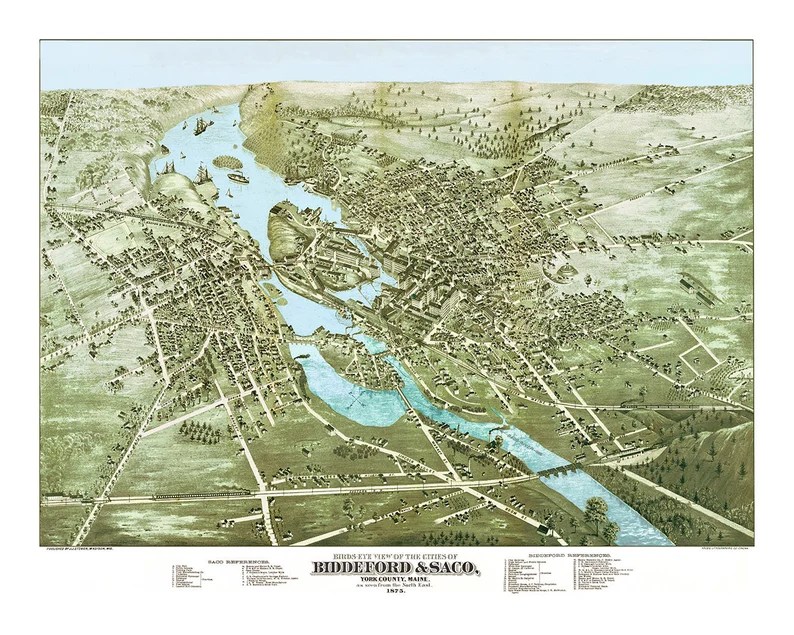
The crew included two brothers from Biddeford. Biddeford has been in the news lately, as the site where a Colombian immigrant was shot and killed by an ICE agent.
Biddeford is an old mill town on the south bank of the Saco River. The town of Saco is on the other side. John, one of the brothers, told me that historically Biddeford was labor, Saco was management. French workers on one side, Yankee bosses on the other. The kids from Saco called the French kids “frogs” and their city, “Biddefrog.” Same thing in Sanford, or “Sandfrog.” Same ethnic division in Lewiston on the Androscoggin River across from Auburn, and Waterville north of Augusta.
As I too had a French last name, and had just recently moved to Maine, John figured I should hear all the frog jokes from him, so I wouldn’t be caught off guard when I heard them elsewhere.
John also told me something that surprised me. He said that when the Québecois first came to Biddeford, and to other cities on Maine’s rivers, things got pretty nasty. He said his grandfather remembered when the Ku Klux Klan paraded in Saco and threatened to cross the bridge into Biddeford. But the French and Irish immigrants were waiting for them, and the Klan had second thoughts and retreated.
Maine, the home of several indigenous tribes, was colonized in the 17th and 18th centuries by both England and France. The French settled in Acadia, which included the maritime provinces as well as parts of Maine, and the English in central and southern Maine. After the conquest of Canada, British forces expelled much of the French population of New Brunswick and Nova Scotia, sending them as far as Louisiana. Some, however, found refuge in Maine’s north along the St. John River.
In the 19th century, scarcity of farmland and economic hardship in Québec drove thousands of French Canadians south. Maine’s mills and lumber industry needed workers and they needed jobs. French-speaking and Catholic, they were seen as a threat by the Protestant majority. The conflict between cultures sometimes became violent.
In 1854 an anti-French mob in Bath burned the Catholic church. In Ellsworth, a mob tarred and feathered a Catholic priest. In 1919 a law was passed banning the speaking or teaching of French in schools.
The 1920s saw the resurgence of the Ku Klux Klan, which directed its hostility not against African Americans, of which there were precious few, but toward French and Irish Catholics. In 1924 in the town of Greenville, forty Ku Klux Klansmen went after union workers trying to organize French lumbermen. Later that year, the Klan exploded a bomb in Lewiston, which had the largest Franco-American population in the state. At one time, the Klan counted over 100,000 members.
Although the Klan’s influence dropped off sharply in coming years, it did manage to infiltrate the Republican Party in Maine and helped elect Ralph Owen Brewster governor in 1924.
Things are different today. Although French Mainers are still a minority—11.5 percent of the population report French ancestry—the days of conflict are over. In recent decades, the pine-tree state has become more diverse, reflecting immigration and migration patterns across the United States. The groups with the fastest growing populations now are Blacks/Africans and Latinos.
A good case study of the integration of immigrants is what’s happening in Lewiston with the settling of refugees from Somali, beginning in 2001. Although there was considerable friction between residents and African immigrants, relations have improved. Fleeing civil war, the Somalis found a haven and jobs in Lewiston. Paying rent and rehabbing old property, they also started small businesses. A vacant downtown area is now lined with shops, restaurants and markets. And they enrolled their children in public schools. In 2015 Somali high school students helped Lewiston win its first soccer state championship. Two more championships followed.
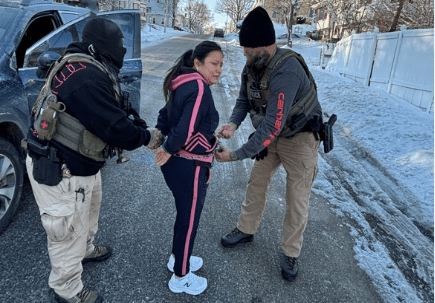
Biddeford is another city that has welcomed immigrants. Last week Mayor Liam LaFountain (of French-Canadian ancestry) joined residents in mourning the killing of Johan Sebastian Guerrero, 25, an immigrant from Colombia. Authorized to work in the United States, Johan was driving to work when he was stopped by ICE agents and shot. His 3-year-old daughter was in the back seat.
A century ago, Biddeford residents stood up to the Ku Klux Klan. Now, like communities across America, they are suffering the ravages of ICE. On Tuesday at a packed city council meeting, Mayor LaFountain demanded justice and accountability for Guerrero and his family.
“We are here because Johan was a member of this community, our community,” he said. “When one of us is taken like this, we do not look away. We do not stay quiet.”
LaFontain told immigrants in the city that “you belong here. You are part of who Biddeford is.”
The mayor also called for “humane immigration reform.” For a country reeling from the government’s mass deportation campaign, such reform is long overdue. It’s the only thing that will make us and our neighbors safe.

