What would you have done then?

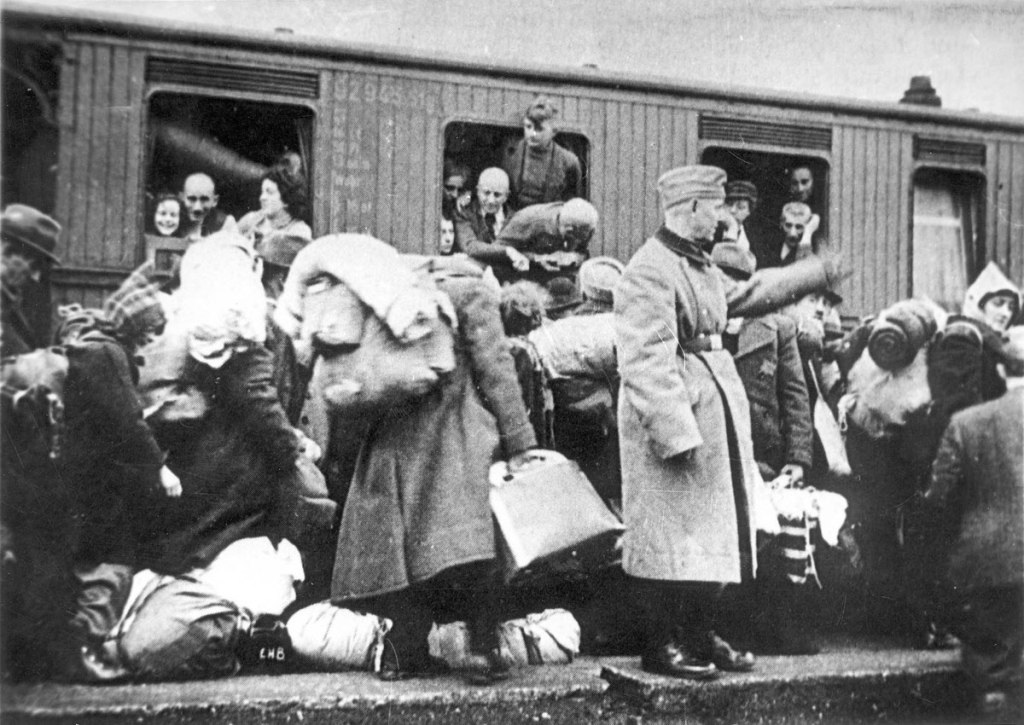
Deportation of Jews from Muenster, Germany, Dec. 13, 1941. Arriving in Riga in occupied Latvia, only one in ten would survive interment, forced labor and Nazi terror.

Sometimes I ask myself what I would have done if I had lived in Germany under Nazi rule.  I remember hearing a recent conversation between the daughter of a Holocaust survivor and a college student.

“If you want to know what you would have done in Hitler’s time,” she said, “ask yourself, ‘What am I doing now?’”

“What do you mean?” the young man replied.

She continued: “What are you doing now about injustice in your own society?”

“Well,” the student replied, “to be honest, nothing.”

“Then, that’s what you would have been doing in Germany,” the survivor answered.

It was a sobering moment, and in the silence that followed, I thought of what had been happening in our country. I thought of George Floyd, murdered on May 25, 2020, by a policeman in Minneapolis, triggering outrage across the country.

That November Joseph Biden was elected president. Then on January 6, two weeks before Donald Trump was to leave office, his supporters smashed their way into the U.S. Congress, killing and injuring police officers as they tried to overturn the election results.

Four years later, riding a wave of anti-immigrant sentiment, Donald Trump returned to office, promising to deport 15 million immigrants in what he called “the largest deportation program in American history.” He called immigrants terrorists and rapists and said they are “poisoning the blood of our country.”

In a nation built by immigrants, Trump and his associates have unleashed a massive and brutal campaign to remove them, most of whom are living peaceably in our cities and towns, working, paying taxes and raising families. The vast majority are Latino, Haitian and African.
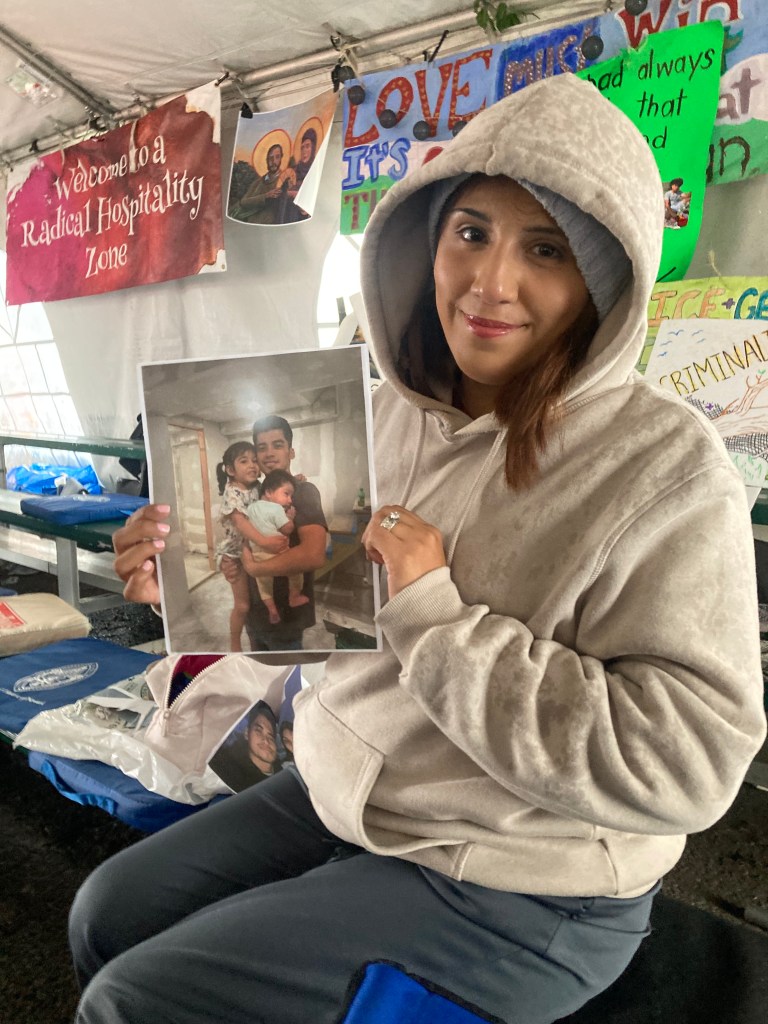
Gabriela Soto holds a photo of her husband, Martin, and their two children. Martin was incarcerated in Delaney Hall in Newark, NJ, before being transferred to anther ICE detention center.

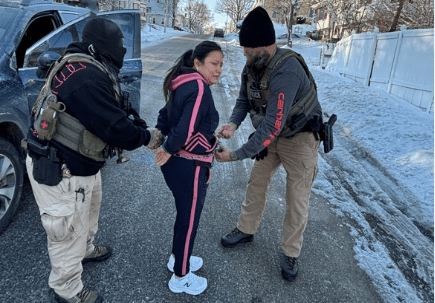
In targeted actions across America, masked ICE agents have abducted hundreds of thousands–fathers, mothers, students and children, then flown them to one of 212 detention prisons to await deportation, often to countries where their lives are endangered. Agents have shot and killed both suspects and protestors and dozens have died in detention.

At the same time, the Trump government has revoked the legal status of millions more, including those under Temporary Protective Status and the Dreamer program. It has also gone after those awaiting hearings on asylum and Green Card applications.

The cruelty of the mass deportation program is exhibited in countless stories, for the most part ignored by mainstream media. If you happen to join the protestors each Wednesday at the New England ICE Headquarters in nearby Burlington, you will hear stories to break your heart and turn your stomach.

You’ll also learn of conditions inside the Burlington ICE building, which provides temporary imprisonment of arrested men and women.  A woman from the Dominican Republic said she spent nine days in a holding room with 16 other women sleeping on the concrete floor with only a Mylar blanket. The only bathroom was an open toilet and the room stank.

From the Burlington Center detainees are flown, often from nearby Hanscom Field, to detention prisons as far away as Louisianna, Texas and California, cutting them off from family and legal support.

Perhaps, you, like me, are heartbroken by the savage treatment of our immigrant population. If so, let me suggest two responses. The first is to go online to the Massachusetts Immigrant and Refugee Advocacy (MIRA) coalition at miracoalition.org. It’s a marvelous, multi-service organization providing support for immigrant families and linking them to legal aid.

The second is to check out Bearing Witness @ ICE, online at bearingwitnessNE.org. Better yet, take the short drive over to Burlington, 10 District Ave., on a Wednesday, as hundreds of people like you and me gather to protest and learn ways to support not only those arrested, but their families, suffering separation and loss of income.

There’s more going on at the ICE center in Burlington. Here’s a list of actions scheduled throughout the week. Check out the websites for more information and updates.

MONDAY & TUESDAY—11 am to 1 pm, sponsored by FIX ICE, fixice.org/mondaytuesday.

WEDNESDAYS—11 am to 1 pm, Bearing Witness @ ICE Burlington, bearingwitnessNE.org.

THURSDAYS—11 am to 1 pm, Justice 4 All @ ICE Burlington, Facebook Group: https://tinyurl.com/48jkcznk.

SATURDAYS—10 am to 2 pm, ICE Weekend Watch, https://tinyurl.com/mutcubd.

SATURDAYS—11 am – 1 pm, No Fear Street Theatre, Corner of Mall Road and District Ave., http://www.nofearstreettheater.com/

Not long ago, on a rainy day outside Delaney Hall in New Jersey, my wife and I sat with a young mother whose husband, locked up inside, had just started a hunger strike protesting rotten food, harsh treatment and lack of medical care. She showed us a photo of him with their two young children. She recently suffered a miscarriage of a third child.

That weekend, her husband was secretly transferred from Dalaney Hall to another detention prison, where he was put into solitary confinement. He is still there.

If you want to know what you would have done in Nazi Germany, ask, what are you doing now.
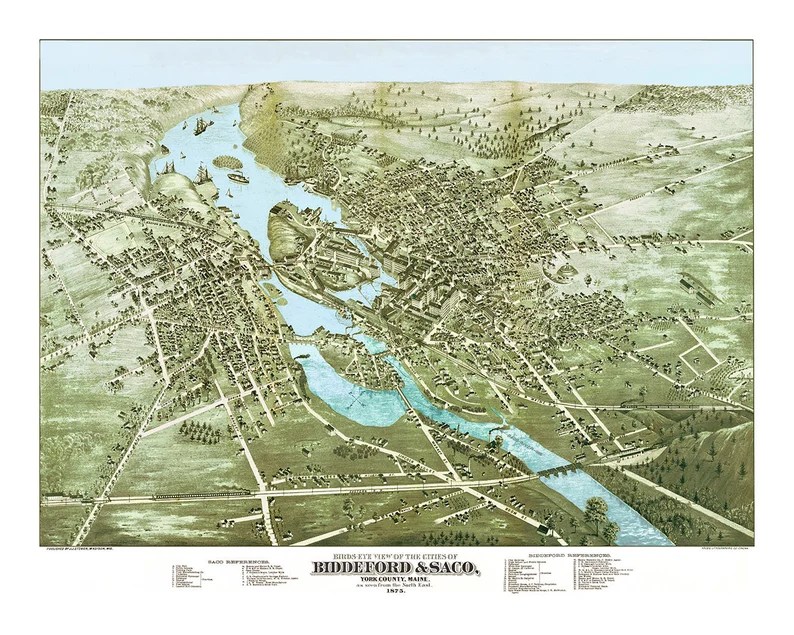
On the Banks of the Saco

1875 map of Biddeford and Saco

In the 1970s, having completed graduate school, I worked in construction in Portland, Maine. I was looking for a job teaching, but nothing had opened up. The crew I worked with all had French last names, and a couple of them spoke French on the job. They or their parents or grandparents had come down from Québec to work in the mills or in the building trades.

The crew included two brothers from Biddeford. Biddeford has been in the news lately, as the site where a Colombian immigrant was shot and killed by an ICE agent.

Biddeford is an old mill town on the south bank of the Saco River. The town of Saco is on the other side. John, one of the brothers, told me that historically Biddeford was labor, Saco was management. French workers on one side, Yankee bosses on the other. The kids from Saco called the French kids “frogs” and their city, “Biddefrog.” Same thing in Sanford, or “Sandfrog.” Same ethnic division in Lewiston on the Androscoggin River across from Auburn, and Waterville north of Augusta.

As I too had a French last name, and had just recently moved to Maine, John figured I should hear all the frog jokes from him, so I wouldn’t be caught off guard when I heard them elsewhere.

John also told me something that surprised me. He said that when the Québecois first came to Biddeford, and to other cities on Maine’s rivers, things got pretty nasty. He said his grandfather remembered when the Ku Klux Klan paraded in Saco and threatened to cross the bridge into Biddeford. But the French and Irish immigrants were waiting for them, and the Klan had second thoughts and retreated.

Maine, the home of several indigenous tribes, was colonized in the 17th and 18th centuries by both England and France. The French settled in Acadia, which included the maritime provinces as well as parts of Maine, and the English in central and southern Maine. After the conquest of Canada, British forces expelled much of the French population of New Brunswick and Nova Scotia, sending them as far as Louisiana. Some, however, found refuge in Maine’s north along the St. John River.

In the 19th century, scarcity of farmland and economic hardship in Québec drove thousands of French Canadians south. Maine’s mills and lumber industry needed workers and they needed jobs. French-speaking and Catholic, they were seen as a threat by the Protestant majority. The conflict between cultures sometimes became violent.

In 1854 an anti-French mob in Bath burned the Catholic church. In Ellsworth, a mob tarred and feathered a Catholic priest. In 1919 a law was passed banning the speaking or teaching of French in schools.

The 1920s saw the resurgence of the Ku Klux Klan, which directed its hostility not against African Americans, of which there were precious few, but toward French and Irish Catholics. In 1924 in the town of Greenville, forty Ku Klux Klansmen went after union workers trying to organize French lumbermen. Later that year, the Klan exploded a bomb in Lewiston, which had the largest Franco-American population in the state. At one time, the Klan counted over 100,000 members.

Although the Klan’s influence dropped off sharply in coming years, it did manage to infiltrate the Republican Party in Maine and helped elect Ralph Owen Brewster governor in 1924.

Things are different today. Although French Mainers are still a minority—11.5 percent of the population report French ancestry—the days of conflict are over. In recent decades, the pine-tree state has become more diverse, reflecting immigration and migration patterns across the United States. The groups with the fastest growing populations now are Blacks/Africans and Latinos.

A good case study of the integration of immigrants is what’s happening in Lewiston with the settling of refugees from Somali, beginning in 2001. Although there was considerable friction between residents and African immigrants, relations have improved. Fleeing civil war, the Somalis found a haven and jobs in Lewiston. Paying rent and rehabbing old property, they also started small businesses. A vacant downtown area is now lined with shops, restaurants and markets. And they enrolled their children in public schools. In 2015 Somali high school students helped Lewiston win its first soccer state championship. Two more championships followed.

Biddeford is another city that has welcomed immigrants. Last week Mayor Liam LaFountain (of French-Canadian ancestry) joined residents in mourning the killing of Johan Sebastian Guerrero, 25, an immigrant from Colombia. Authorized to work in the United States, Johan was driving to work when he was stopped by ICE agents and shot. His 3-year-old daughter was in the back seat.

A century ago, Biddeford residents stood up to the Ku Klux Klan. Now, like communities across America, they are suffering the ravages of ICE. On Tuesday at a packed city council meeting, Mayor LaFountain demanded justice and accountability for Guerrero and his family.

ICE agents arrest a women during “Operation Catch of the Day” in Maine. MSN Photo.

“We are here because Johan was a member of this community, our community,” he said. “When one of us is taken like this, we do not look away. We do not stay quiet.” 

LaFontain told immigrants in the city that “you belong here. You are part of who Biddeford is.”

The mayor also called for “humane immigration reform.” For a country reeling from the government’s mass deportation campaign, such reform is long overdue. It’s the only thing that will make us and our neighbors safe.

What Happens There Matters Here

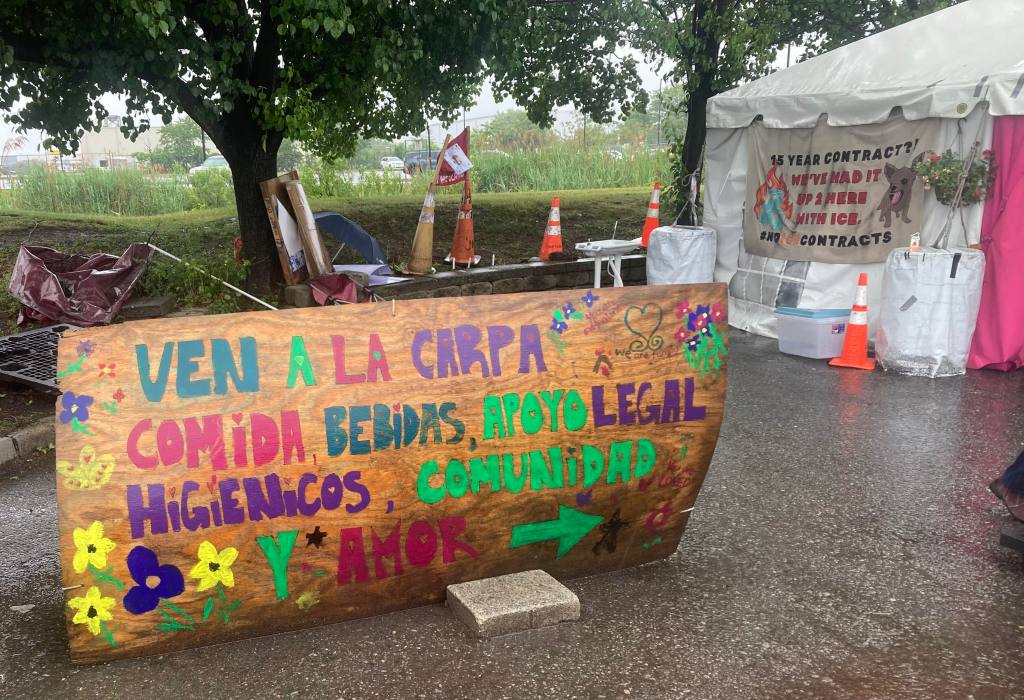
Sunday morning Becky and I walked through heavy rain to a tent set up just outside Delaney Hall, an ICE detention prison holding over a 1,000 men and women in Newark, NJ. We had driven over from our daughter’s home in a Newark suburb. She had arrived earlier, joining other volunteers to set up coffee and food along with clothing, diapers and toys for families hoping to visit their loved one inside.

“Come to the Tent” in Spanish is posted by volunteers providing support to families of detainees at the Delaney Hall Detention Center.

Situated off the turnpike in New Jersey among huge gas tanks, warehouses, depots and a state prison, Delaney Hall has been the flashpoint for protests of its inhumane treatment of inmates. On Friday, around 300 detainees began a weekend hunger and labor strike and called on Gov. Mikie Sherrill to visit Delaney Hall, a private, for-profit facility, and address their complaints.

The day before, Senator Andy Kim (Dem-NJ) had visited Delaney Hall and met with inmates and advocates. Voicing his support for the detainees, he wrote this on his Facebook page:

I rushed to ICE detention center Delaney Hall yesterday when I heard detainees began a hunger strike. Here’s what I saw:

An 18 yr-old high-school student crying and saying she just wanted to graduate senior year;

A pregnant woman unable to get full OBGYN medical support;

A woman who had a miscarriage in the detention facility and left to manage all on her own;

A mom not allowed to spend more that a few minutes with 4-month-old baby;

A husband of an American-citizen wife and kid;

A carton with the milk inside congealed solid (expiration date is tomorrow); [there were also complaints of worms in the food.]

A man there for nearly a year with no movement in his legal efforts;

A document showing next Tuesday’s court docket showing 74 cases before one judge in one day (averages about 5 minutes a case);

A man telling me ICE is trying to deport him to the Democratic Republic of Congo, where there is an active Ebola outbreak (he’s from South America originally);

Numerous people who were arrested at scheduled interviews for Green Cards (trying to follow the formal process);

A family unable to find out what hospital their family was sent to (ICE said they cannot give any medical updates to families of hospitalized detainees);

The Statue of Liberty as I left the facility to drive home. [You can see the Statue from Liberty State Park in Jersey City, not far from Delaney Hall.]

In another column, I’ll write more about what happens at Delaney Hall, and in the tent where volunteers provide support to families of detainees. Because what happens there, even if it’s not on the 6 o’clock evening news, must matter to us.

Delaney Hall Detention Center in Newark, NJ

EC 101 or How to Make Ethnic Cleansing Work for You

ICE Deportation, CNN Photo

Welcome to EC 101. We hope you will find this course helpful to you in the challenging days ahead.

Intro: Ethnic Cleansing is a useful tool for removing people from your country or community. The beauty of it is, you can use it on the basis of several factors. Race is just one. It also works well with religion, language or politics.

Background: Over the years, EC has been used successfully by many countries and societies to rid themselves of unwanted elements. There are many examples. China, Sudan, Serbia and Rwanda. And of course, Nazi Germany, the country that took EC to its highest level.

In this course you will learn how to put in place the building blocks of a successful EC campaign. But remember. Each step is important if you are to achieve your goals.

Step One: The first step is to identify your target population. Consider the fears and prejudices within your own group. Who don’t you like? Who do you resent? Who are you afraid of? This will lead you to target people who don’t look or speak like you.

Your targets can be a racial group, like Blacks or Asians, or a national group, like Mexicans or Somalis. Or religious groups, like Jews or Muslims. If you’re trying to maintain dominance of a specific demographic, for example, white Christians, any or all of the above can become targets. You can also identify cultural subsets you may wish to rid society of, like gays or transsexuals.

A good place to start is with immigrants. Because they often have a different skin color, wear strange clothing or speak a different language, they will meet most of your criteria for EC.

Step Two: Begin a wide-scale campaign of verbal abuse and dehumanization. This will take time, so it’s important to start early. For example, Adolf Hitler began slandering Jews and calling for their removal as early as 1919. And our president didn’t just suddenly start trashing immigrants. As early as 2015 he was calling Mexicans criminals and rapists. Over time he added to his vocabulary, calling them snakes, blood polluting, and garbage. Descriptions of weird behavior are also effective, like accusing Haitians of eating cats and dogs.

At the same time, it will be helpful to identify with the dominant culture and religion. Tactics might include showing up at religious conferences and prayer breakfasts. Find an opportunity to hold up a Bible and stress your support for posting the Ten Commandments in schools.

Step Three: Marshall all economic and political resources. For this you will need the installation of patriots at all levels of government, from Town Hall to the Supreme Court. Once this has been achieved, you can obtain the legislative, judicial and financial support you will need.

Step Four: Preparation—before you launch your campaign, you must put in place adequate infrastructure for operations, detention and deportation. This takes years to put in place, and involves major construction projects and hiring of loyal personnel. It also will require specific working agreements with private contractors in incarceration and transportation.

You will also need agreements with other countries, who will receive and house your EC deportees. Warning: some countries will want nothing to do with this. Others, like El Salvador, will gladly accept and imprison your deportees if compensated.

Finally, set high goals. Note, for example, the recent goals set by the Department of Homeland Security of arresting 3,000 persons a day.

Step Five: The Launch–It’s important when launching your campaign to develop effective marketing tools. Coming up with catchy names and phrases that can help sell your EC product. Recent examples include the naming of the Florida detention center ‘Alligator Alcatraz,” and the ICE surge into Maine as “Catch of the Day.” Another is the staging of Homeland Security Director Kristi Noem in front of tattooed criminals in cages at El Salvador’s infamous CECOT prison.

Implementation: Now that everything is in place, launch your EC campaign. You now have power. Use it. The worst thing you can do is to appear weak or confused. If you must use violence—know that at the highest level of government, your leaders will back you.

When making arrests, you may need to separate parents from children, or children from parents. Don’t let your feelings get it the way. Focus on the larger good you are doing for your country.

Caution: At some point you may come into conflict with people like you, that is, white Americans, who try to deter or distract you from doing your job. Sadly, they have been indoctrinated by radical, leftist propaganda. As difficult as it is, you must treat them as the domestic terrorists they are.

A useful tip: It’s important when conducting your EC campaign to send signals to the dominant group that you are not targeting them. One way is to welcome white immigrants from South Africa or Northern Europe. This makes it clear that you are not opposed to all immigrants, only those with darker skins.

A final word: Throughout your Ethnic Cleansing campaign, keep your eyes on the prize. Make America Great Again by making America White Again. Conducting a successful EC campaign will require your perseverance and undying loyalty.