1936 & 2026–What will we remember?

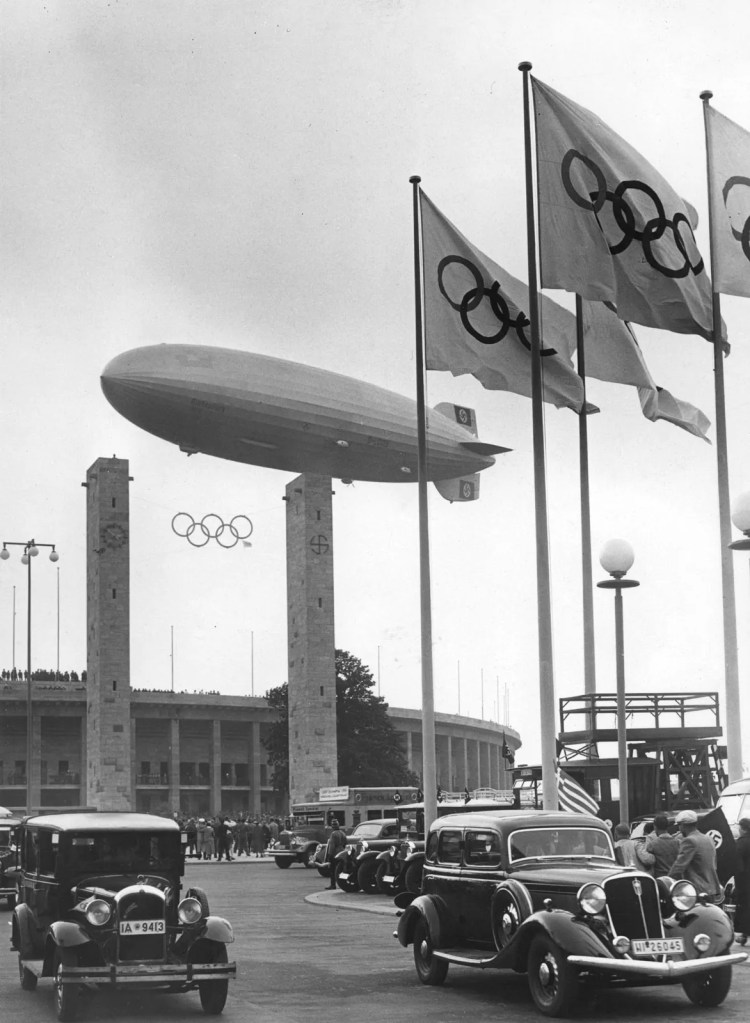
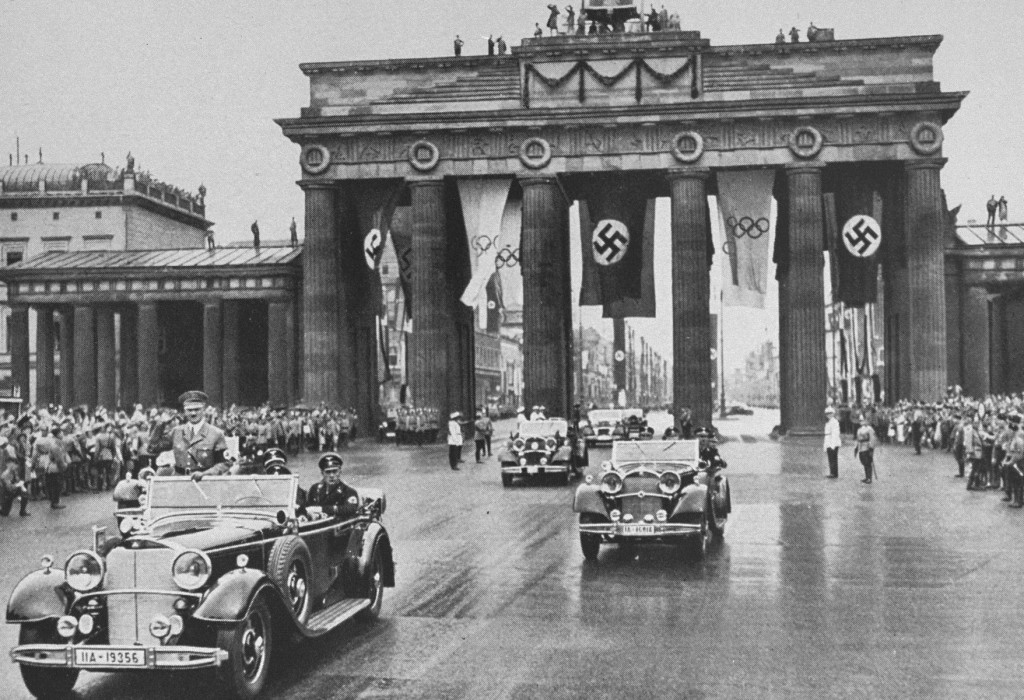
The black-and-white photos are eerily compelling. A giant airship, the Hindenburg, hovers above the stadium. In another, a runner in white, carrying a torch, leads other runners through the streets. A third shows Adolf Hitler and his entourage as they pass through the Brandenburg Gate. The Führer is standing in his open Mercedez Benz. A fourth shows him arriving in the massive Olympic stadium as 120,000 Germans raise their arms in Nazi salute.

We remember the 1936 Olympics as a pivotal event, showcasing the glory and the infamy of the Third Reich. It took place three years after Adolf Hitler came to power and three years before Germany invaded Poland and World War II began. I think of these games with all their ceremony as I watch the final games of the World Cup, hosted by the United States, Mexico and Canada.

When the Olympics opened in 1936, anyone who was paying attention knew of Germany’s persecution of Jews, Roma and others. As early as 1933, the Nazis had instituted an Aryan-only policy in all athletic organizations. Jews were excluded from sports facilities and associations. Other actions were more sinister.

In April of ’33, the government barred Jews from holding civil service, university, and state positions. That same month it instigated boycotts of Jewish businesses and shops. In May, across the street from the University of Berlin, mobs burned over 20,000 books. That spring, the Nazis opened the first of 23 main concentration camps near Dachau.
In the next two years Hitler pushed through a series of “Nuremburg Laws,” stripping Jews of their citizenship and prohibiting intermarriage. Germany also began compulsory sterilization of the “unfit,” mentally and physically disabled persons in nine categories. Euthanasia would come later.

In the summer of 1936, in preparation for the Olympic games, the Nazi government put on a kinder face for the world. Antisemitic signs and posters were taken down and government pronouncements muted. To show its racial tolerance, Germany included in its Olympic team of 433 athletes one Jew, the star fencer, Helene Mayer, whose father was Jewish.

Considered a triumph of propaganda, the 1936 Olympics showcased Germany as a respectable and welcoming member of the international community, a nation built by hard work, family values and patriotism.

What most Americans remember about the Berlin games, however, was the brilliance of Jesse Owens, who won four gold medals, defying the Hitler’s racial ideology. With his stunning victories, Owens became a household name, with little thought to the racial prejudice he and other African Americans faced back home.

There were 359 athletes in the American team, including 18 African Americans and two Jews. The Jews were Marty Glickman and Sam Stoller, both talented sprinters. Controversy would later erupt when it was learned that on the day of the 4×100-meter relay, for which they had trained, they were pulled from the race, many believe, to spare Hitler further embarrassment.

Despite the success of the Americans, the Germans won the lion’s share of Olympic medals, 38 gold and 101 total, bolstering the Nazis’ claims of Aryan superiority.

As we watch the finals of the World Cup on Sunday in New York, we close one of the most successful international sports events of our time. Sixteen cities in three North American countries have hosted 102 games, rich in ceremony and bonhomie. The 46 teams came from five continents, thrilling fans and spectators with their passion, pride and skills on the pitch.  

I’m wondering, though, how we will look back on the 2026 World Cup, and particularly, our country and what was going on out of sight. In writing this, I am not saying things in America are the same as in Germany in 1936. They are not. But there are similarities.

While athletes from around the world have been chasing soccer balls, the government has been chasing immigrants in what it promised would be the largest mass deportation project in American history. The slogan for ramped up enforcement in Maine was titled “Catch of the Day.” Arresting thousands a day in streets and job sites around the country, the government is holding some 70,000 men, women and children in 212 detention centers, where they await deportation. Thousands more are being flown every day to countries they had fled or other unsafe destinations.

Fathers and mothers have been taken from children. Wage-earners arrested have left families stranded. Men and women have been shot and killed, leaving their blood in the streets.

Targeting not only those without documentation, but 1.3 million here legally under the Temporary Protected Status, the government has in effect instituted ethnic cleansing, considered a crime against humanity. Most of those arrested are black or brown.

Before mass deportation began, the President and others engaged in persistent slander of people from Haiti, Africa and Latin America. Is this not reminiscent of the Nazis’ decades-long efforts to dehumanize Jews, necessary before action can be taken against them? Necessary before “the final solution”?

Years from now, we will recall the glorious World Cup games of 2026, a time when athletes and fans from around the world joined us, competed against us and celebrated with us. Yet so much has been going on behind the curtain.

What will we remember?

Photos from the National Archives
Calibri, Fraktur and “Saving America”

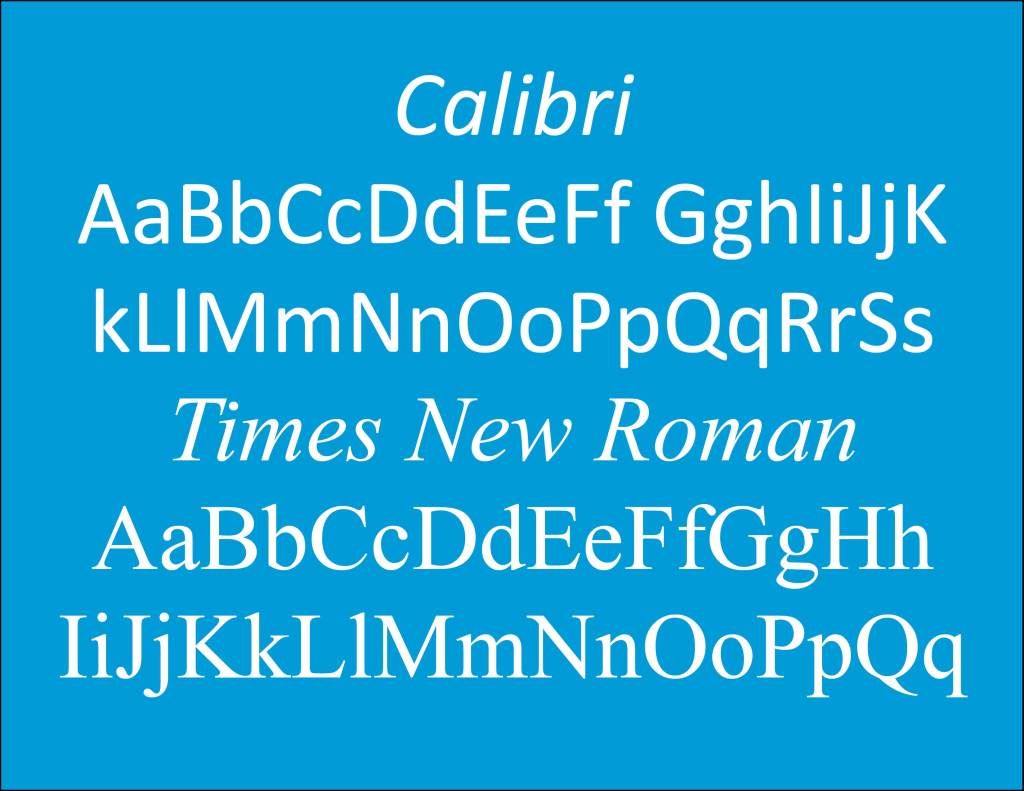
When Marco Rubio announced recently that the State Department was switching its official typeface, I wondered what was going on. Having taught a course in typography, I am well aware of type design and the nuanced notions associated with certain fonts.

I also immediately thought of a typeface called fraktur, a Germanic font Adolf Hitler loved, then hated, and the controversy over typefaces during the Third Reich.

The typeface Rubio doesn’t like is Calibri. It’s a standard sans-serif font. For many years it was the default in Microsoft programs, most recently replaced by a similar one called Aptos.

“Sans serif” means the letters are simple strokes without serifs, the little hands and feet at the end of lines. There is also no variation in line width. Their development was part of the avant garde movement in art, meant to express simplicity and modernity.

One of many sans-serif fonts in the modernist or humanist style, Calibri was created by Dutch typographer Lucas de Groot. With clean lines and slightly rounded corners, it is easily readable online and print and is often selected for presentations. Used during the Biden presidency, it is easier to read in small sizes and considered more accessible for those with disabilities.

So, what’s wrong with it? According to Rubio, Calibri is too informal, not befitting the dignity and tradition of America. In a directive to all diplomats, Rubio mandated the use, instead, of Times New Roman, a traditional serif typeface. He called the use of Calibri by the previous administration a capitulation to DEIA–that’s diversity, equity, inclusion and accessibility. In short, Calibri is too “woke.”

But why Times New Roman?

One of many classic serif typefaces, Times New Roman was designed in 1931 as the typeface for the Times of London and has long been a go-to font for books and newspapers. Its condensed letter forms and spacing make it efficient for presenting large amounts of text. I use it occasionally, when I want a traditional look in my designs.

The hullabaloo about typefaces reminds me of what happened in Germany in the 1930s, just as the modernist typefaces were gaining popularity. It should not surprise you to learn that Adolf Hitler and the Nazis abhorred the sans serif designs. Instead, they wanted a typeface that would reflect their heritage and status as a Nordic power. They chose an old typeface called fraktur.

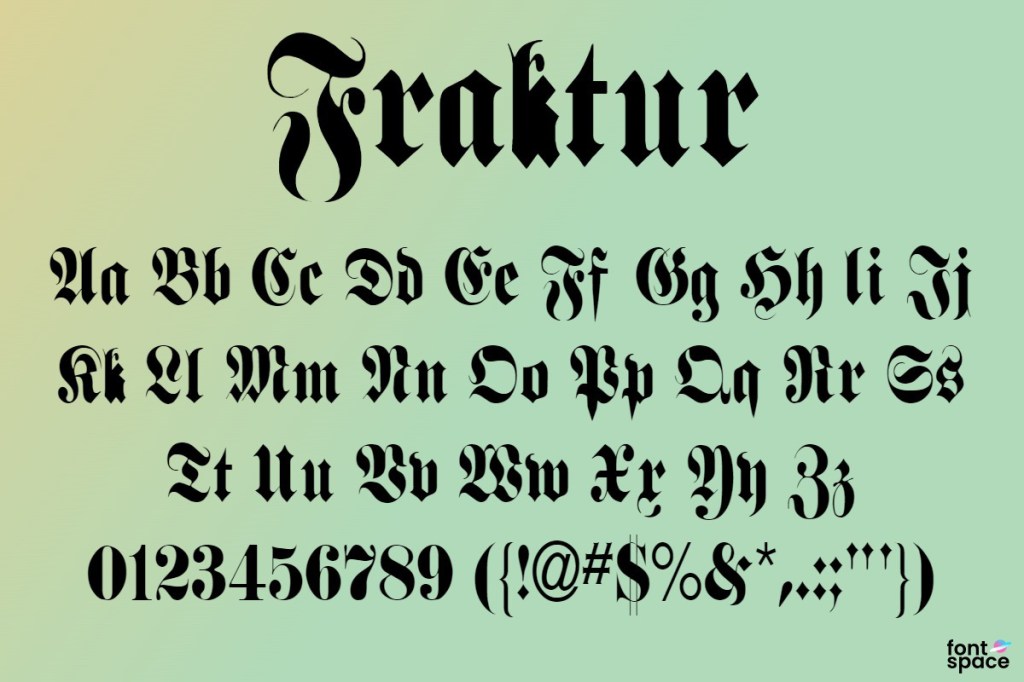
Fraktur is distinctly unlike both the sans serifs and traditional “romans” in use throughout the Western world. Designed in the 16th century, it’s an updated version of a German blackletter, with thick, angular forms similar to what we know as Old English. As the official Nazi typeface in the 1930s, it was used in all government documents and propaganda.

That ended abruptly in 1941, however, when the Nazis discovered that the designer of fraktur was–can you imagine their shock–a Jew. In an about-face, the Nazis then outlawed its use and instead mandated that Antiqua, an old roman typeface, be used.

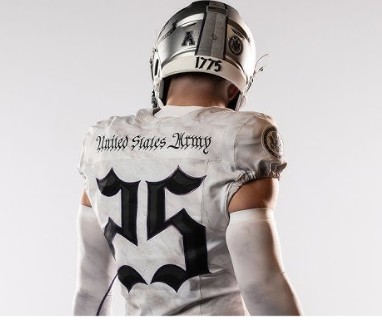
Fraktur and similar blackletter designs never disappeared, however, and since World War II have been widely used by neo-nazis as a link to the Third Reich. Appearing in banners, graffiti and tattoos, they have also crept into mainstream use, as on U.S. Army football jerseys in a recent Army-Navy football game.

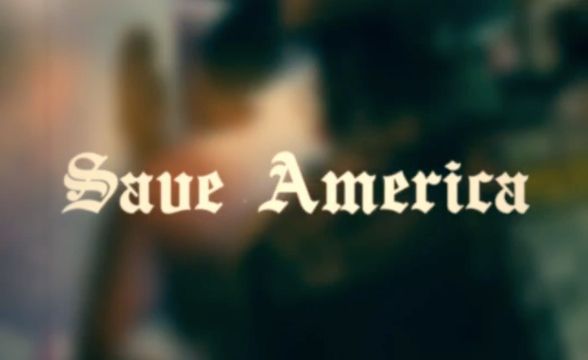
In another appearance, Fraktur is used in an ICE recruitment video in which ice agents smash down doors and unleash an attack dog on a suspect. At the end of the video are three phrases: HUNT CARTELS, SAVE AMERICA, JOIN.ICE.GOV.

So, what can we say about typefaces? It’s important to know how typefaces work, why one font works better than another. It’s also important to understand that the typeface you use is part of the message. In some cases, it is the message.

An Unholy Convergence

By Ben Jacques

In the fall of 1919, just three months after the Versailles Treaty marked Germany’s defeat in World War I, Adolf Hitler wrote a letter to a fellow army soldier. It is considered the first printed expression of his antisemitism. Composed most likely on an army typewriter, the letter lays out Hitler’s belief that Jews are not just people of a different religion. Rather, they are an “alien race,” intent on destroying society.

To counter their influence, Hitler proposed a “rational antisemitism,” a political movement to systematically take away their “privileges,” culminating in their “irrevocable removal” from Germany.

In time, their “irrevocable removal” became the “final solution,” the murder of six million Jews throughout Europe.

It’s not difficult to see in the candidacy of Donald J. Trump a similar convergence of nationalism and racism. Substitute the word “immigrant” for “Jew,” and you see the same calculated dehumanization of a sector of the population.

Trump’s targeting of immigrants is built on racism. In 2018 he complained about “having all these people from shithole countries come here,” that is, from Haiti, El Salvador and Africa. Then he added, “We should have more people from Norway.”

In following years, Trump has ramped up his attacks. In 2023 he said “illegal immigrants are poisoning the blood of our nation,” echoing Hitler’s statement that “Jews and migrants are poisoning Aryan blood.”

At the 2024 Republican Convention, Trump promised the deportation of 11 million illegal immigrants—a figure he put at 18 million. In September he said the mass roundup would be a “bloody story.”

Since then, Trump’s attacks have intensified, including the assertion, repeated by his running mate and other followers, that Haitian immigrants in Springfield, Ohio, were eating their neighbors’ pets.

Targeting immigrants, legal or otherwise, is not new in America, nor is “white nationalism.” The nation that opened its doors to European immigrants also passed the Chinese Exclusion Act, denying citizenship to Chinese workers who built our railroads.

During World War II we imprisoned 120,000 Japanese Americans in concentration camps. In the 1950s we deported a million Mexicans, legal and undocumented, who had harvested our crops. From 2017-21 under Trump’s “zero tolerance” policy, 3,900 children were taken from their parents.

We are also the nation that in 1939 prevented the S.S. St. Louis, a ship carrying over 900 Jews fleeing Nazi Germany, from docking in Miami. Anchored offshore, the ship waited. On deck that night, children joined parents to gaze at the city lights sparkling in the distance.

When permission was denied, the St. Louis returned to Europe. For many it was a death sentence. Two-hundred-fifty-four perished in Nazi concentration camps.

As November 5 approaches, we again see an unholy convergence of racism and nationalism. A nation of immigrants, we are told to fear immigrants. We are urged to accept slander and misinformation as truth.

How we vote this year will affect the safety and well-being of millions. It will also determine our character.

Note:  In 2012, the United States Department of State apologized to the survivors of the St. Louis. In 2018, Canadian Prime Minister Justin Trudeau did the same.