Grampa Durell worked by touch and sight. A carpenter, he knew each wood’s hue and grain. He measured close so things would come out right.
To mark each piece, each board’s width and height, He used a fold-up, bass-wood rule; took pains To saw, fit, join, and sand by touch and sight.
His tools survive: hand drills that curl and bite Into the wood—chisels, squares and planes That seem today to fit my hands just right.
So, too, his gifts: tables, dressers, joints still tight, A pine doll cradle with a cherry stain, A great granddaughter’s now, for touch and sight.
In the Spanish-American War he missed the fight, Got dysentery and couldn’t avenge the Maine. But things have a way of turning out all right.
We keep his lieutenant’s sword, the blade still bright, But use his carpenter’s rule again and again, Reminding us to learn by touch and sight, Measuring well so all will come out right.
Note: I wrote this villanelle about Becky’s grandfather, a carpenter in Lowell. I knew him only through family stories and from handling his old tools “that seem today to fit my hands just right.” Villanelles are fun to write, but they ain’t easy. The most famous one is, perhaps, Dylan Thomas’ “Do Not Go Gentle into that Good Night.”
One of my favorites is Theodore Roethke’s “The Waking.” Look it up. It’s a wonderful exploration of consciousness and the interplay of feeling/thinking, motion/stillness, action/reflection, East/West, etc., full of wisdom.
Listening to Jimmy Tingle Saturday as he emceed the No Kings protest/rally on the Stoneham Common, I couldn’t help but think of a 30-year-old preacher in the white church rising up behind him. The year was 1850 and the preacher was the Rev. William Chalmers Whitcomb. On a cool morning in November, he stepped into the pulpit and preached a fiery sermon that called on parishioners to follow God’s law rather than the law of the land.
Then as now, the country was divided. Congress had just passed the Fugitive Slave Act, mandating the return of all former slaves to their owners. State governments, local law officers, and even citizens were called on to aid in its enforcement. The law imposed stiff penalties of imprisonment and fines for anyone sheltering fugitives.
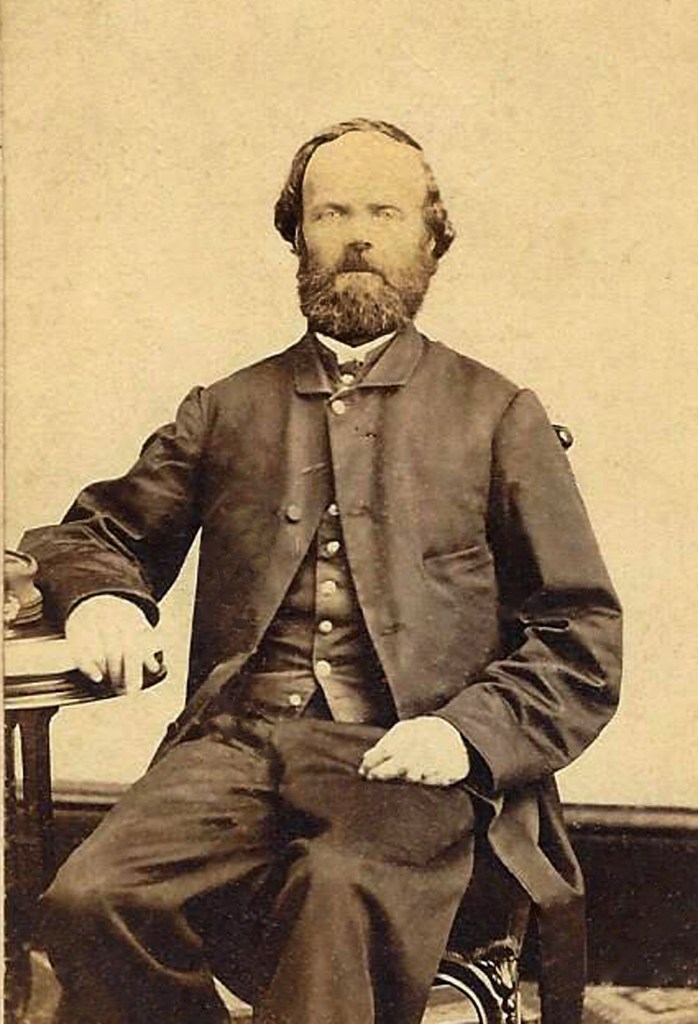
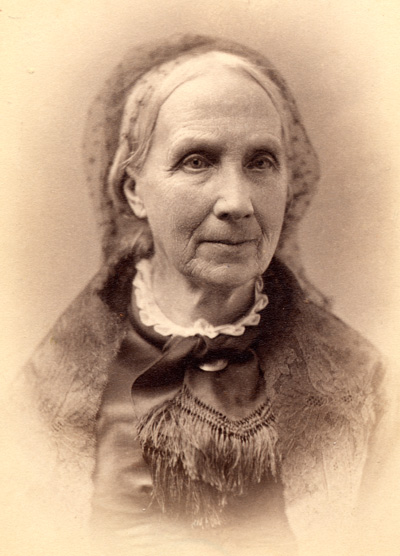
The Rev. William Whitcomb
The Fugitive Slave Act tore apart families, towns, political parties and churches. The governor, most legislators and civic leaders supported it. Even Daniel Webster, the esteemed Massachusetts senator, now secretary of state, hailed the federal law as the best way to keep Southern states from bolting.
In Stoneham abolitionists had met with fierce opposition. The host of the first recorded meeting in town, attended by William Lloyd Garrison, was told his house would be burned down. In a fight after an abolitionist meeting at Town Hall, a 37-year-old man—husband and father of three—had been stabbed to death.
Although abolitionist sentiment was growing, by 1850 most ministers either remained silent or spoke in favor of the federal law. Not so the new minister in Stoneham.
“I make no apology” for speaking on this subject, Whitcomb told the people of Stoneham. He only regretted that he had not spoken out sooner.
He began by citing the Old Testament book of Deuteronomy, Chapter 23: 15-16: “Thou shalt not deliver unto his master the servant which is escaped from his master unto thee: He shall dwell with thee, even among you, in that place which he shall choose in one of thy gates, where it liketh him best: thou shalt not oppress him.”
In defiance of the federal law, Whitcomb called on his congregation to “Hide the outcast or help him on his journey to a safer place, even though you may risk personal security, property, and life.”
The Stoneham minister urged nonviolent action based on the principle of love. “Shed no blood,” he said. “Wield no weapons but those of truth and love. Use no arms but those God hath given you.”
Fast forward from the church across the street to March 28, 2026, as some two thousand citizens packed the Stoneham Common to protest the federal government’s policies and actions. It was the third national No Kings Day with massive demonstrations geared to stopping the rise of authoritarianism in the United States. Participants protested the war in Iran, the violence of ICE, interference in elections, the targeting of immigrants and LGBTQ+ and attacks on First Amendment rights.
Choirs sang, leaders rallied, a guitarist soloed, protestors chanted, while throughout Jimmy Tingle inspired and entertained the throng with his passion and wit. Pulling a harmonica from a pocket, he opened with a reedy version of the National Anthem. The harmonica reappeared later, when in closing, Tingle told the story of John Newton, the one-time slave trader who repented and became a leading abolitionist. He then played the hymn that Newton wrote, “Amazing Grace.”
I couldn’t help but think, as we left the Common, some to continue to the Boston Common for the 1 p.m. rally there, that Rev. Whitcomb would have been proud.
The gardener comes with a new red hose. He sets up the sprinklers under the pepper tree, waters the zinnias, lilies, iris, then rakes smooth the gravel in the path.
Perhaps he didn’t actually see it happen, I mean the opening of the stone. But how many of us have watched a seed open? Perhaps at the time he was touching the broken stem of a rose.
Encrypted passwords? Secret codes? Your keyboard exploding? No, these nonsensical clusters of the alphabet are the names of—you guessed it–prescription drugs in TV ads (I’ve scrambled the letters of their actual names, but you get the point).
Want to catch the evening news? But wait, isn’t it possible you have a rare disease or chronic impairment that can only be treated, or managed, with this amazing drug. So be sure to ask your doctor if ABACADABRA is right for you.
If you’re like me, you lunge for the remote—now where did I put it?—and press the mute button. Once you’ve done that, you can sit back and enjoy the show. Because without the sound, these ads are rather pleasant. You’ll see families riding bikes, fathers barbecuing, seniors playing tennis, lovers embracing. Beautiful people, beautiful lives.
Muting the sound also means you don’t have to listen to the side effects, often spoken hurriedly in a low voice. These may include–now don’t panic–nausea, headaches, heart palpitations, bleeding, disorientation, fainting, liver failure, heart failure—and so on, depending on the drug being pitched. Lord have mercy!
Did you know that the United States is one of only two countries in the world that allow direct-to-consumer marketing of prescription drugs on TV. When our cousin from Germany visited us recently, she was amazed. “That’s not allowed in Germany,” she said.
Since the 1980s, when Congress let the FDA loosen rules on direct consumer drug marketing, the airwaves have been saturated with ads. Drug companies must, however, present risks along with benefits.
Big Pharma, which used to only target doctors, now pitches its drugs directly to you. So what’s the harm in this?
First, Big Pharma is asking you to evaluate a complex medical substance and market it to your physician. I don’t know about you, but that’s not my job.
Second, the ads push costly brand names over more affordable generics.
Third, the billions drug companies pay to make and place these ads gets passed on to us in higher prices.
Fourth, the ads are driving us crazy.
How I long for an evening at home watching TV without being battered by drug ads. Ads for heart murmer, incontinence, diabetes, erectile dysfunction. The worst is the one featuring a bent carrot. That’s right, a carrot!
Like millions of other Americans—and people around the world—I’m convinced that TV drug ads are bad for our health. It’s time we asked Congress to stop them.
At the crosswalk a blind woman offers you her arm as you cross she says she has looked into heaven for you you cup your hand to your ear but all you hear is the turning of keys
She steps into a shop and you think I should have said something
You walk on promising yourself that next time you will know whether to use the polite or familiar that next time you will join the seniors doing tai chi in the park
that next time you will lift up the toddler in the doorway the one that won’t stop crying and sing him all the verses of the song you remember now for the first time
Note: art by Kenneth Patchen from the cover of Panels for the Walls of Heaven, Berkeley, 1946.
On the road to Concord, three Black men in a wagon make a daring escape
It had rained that day in Boston, and now, even though the moon was full, there was little light in the sky as three men left Cambridge and headed for Concord. No, it wasn’t the midnight ride of Paul Revere, but another of unusual significance. For riding in a dark wagon was a fugitive from justice and two conspirators, unwilling to let another human being be returned to slavery. It was Saturday, Feb. 15, 1851.
The morning had started out as any other. Shadrach Minkins, a waiter at the Cornhill Coffee Shop in Boston, had put on his apron and started work. What he didn’t know was that he would soon become a test case for the Fugitive Slave Act, a law enacted by Congress to keep Southern states from bolting. The story has been told beautifully by Gary Collison in his book, Shadrach Minkins: from Fugitive Slave to Citizen, from which I have drawn here.
Born into slavery in the port city of Norfolk, Virginia, Minkins had worked for various masters, having been sold three times. In the spring of 1850, around 30 years of age, he disappeared, escaping most likely as a stowaway on a merchant ship headed north. Arriving in Boston, he joined a community of some 2,500 free blacks and former slaves. Considered a haven for those seeking their own emancipation, Boston would soon become the focus of federal agents and bounty hunters.
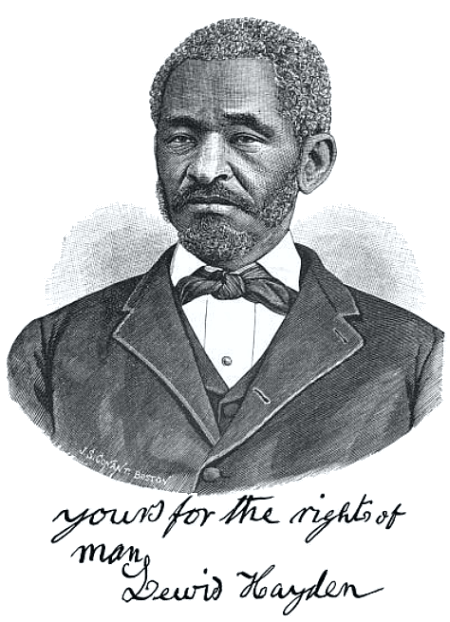
David Hayden was a leader in Boston’s abolitionist community.
Mandating the return of all former slaves to their owners, the Fugitive Slave Act imposed stiff penalties of imprisonment and fines to anyone sheltering fugitive slaves. Further, state governments, local law officers, and even citizens were called on to aid in its enforcement.
If Minkins could be arrested in Boston, the hub of the abolitionist movement in the North, and returned to his owner, Southern states would see that Washington was protecting their interests, muting talk of succession. Even President Millard Fillmore and Secretary of State Daniel Webster had approved Minkins’ capture.
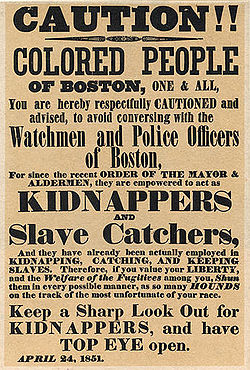
Enacted in September of 1850, the Fugitive Slave Act divided families, towns, political parties and churches. As most governors, legislators, and clergy fell in line with the law, New England abolitionists voiced their opposition. In Boston, the Vigilance Committee, made up of Black and white abolitionists, warned of arrests and planned counter measures.
Poster urging fugitive slaves in Boston to watch out for slave catchers.
Now, as Minkins waited tables in the restaurant, a federal marshal and eight officers took up positions outside the restaurant. After a considerable delay, waiting for the man who would identify their suspect, the marshal and one of his men entered the restaurant and ordered coffee. They were served by a “stout, copper-colored man,” no other than the fugitive they sought, writes Collison.
When Minkins took the marshal’s payment to get change, two officers grabbed him under the arms, rushed out a back door and dragged him into the Court House, a block away. They had been seen, however, and word quickly spread. Within minutes a crowd of abolitionists and onlookers filled Court Square. One of them was a former slave from Kentucky, Lewis Hayden, now a clothing merchant and owner of a boarding house on Beacon Hill.
For several years, Hayden had been owned by Henry Clay, the senator and future architect of the Fugitive Slave Act. After seeing his siblings, then his wife and child sold, Hayden had fled with his second wife and her son to Philadelphia, then on to Canada. In 1846 Hayden brought his family to Boston. Lewis and Harriet Hayden became leaders in the abolitionist community, and their home on Southac Street a station on the Underground Railroad.
As Shadrach Minkins awaited arraignment, abolitionists packed into the stairway and hallway outside the upstairs courtroom. After the judge arrived, federal officers presented evidence that the suspect was in fact a fugitive from Virginia and the property of a Norfolk businessman.
Meanwhile, the crowd inside and out became more agitated. Defense attorneys, including Richard Henry Dana, Jr., presented petitions for Minkins’ release. When they were denied, black activists led by Hayden forced their way into the courtroom, surrounded Minkins and carried him “by the collar and feet” out to the street. Then, mixing in with the crowd, Hayden and Minkins scurried off towards Charles Street.
Turning quickly into a side street, Hayden took Minkins to the widow Elizabeth Riley, who hid him in her attic. Returning after dark, Hayden then took Minkins across the bridge to Cambridge and the home of the Rev. A. J. Lovejoy. HHe knew, however, that the fugitive could not stay there for long.
Later that night, Hayden returned to the minister’s home. This time he came in a wagon drawn by two horses, one black and one white. The wagon was driven by John J. Smith, a barber and fellow abolitionist. Picking up Minkins, they headed west.
My guess is Hayden and Smith, dressed in oil-cloth and sou’esters, sat up front, while Minkins lay covered by a tarpaulin in the bed of the wagon. They may have traveled on the Concord Turnpike, which was the most direct route, but which had several steep hills. Or they may have taken the old route through Lexington along Battle Road to Concord. Perhaps the rain had stopped by then and the moon was penetrating the cloud cover with faint light. Given the muddy roads, it must have been slow going.
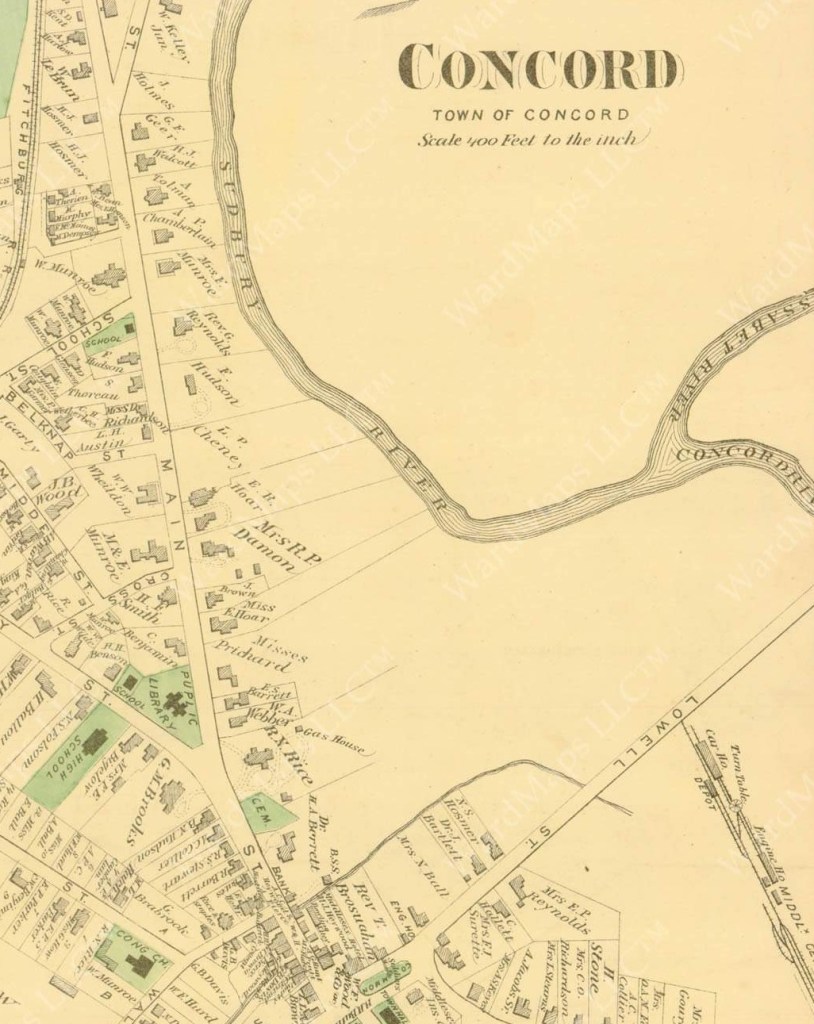
19th century map of downtown Concord.
About 3 a.m. Smith turned the horses onto Main Street in Concord. Proceeding through the sleeping town, they then angled left onto Sudbury Road and entered the yard of the blacksmith, Francis Bigelow. Hearing the wagon, Francis got out of bed and went to the door. Francis’ wife, Ann, who was unwell, may have looked out the upstairs window, for it was she who noted the color of the horses. Years later, Ann would tell the story to Edward Waldo Emerson, Harriet Robinson and others, accounts found in the Concord Free Public Library.
“Mr. Bigelow, hearing the carriage, opened his door, and let in the poor fugitive [and his escorts], though the penalty was a thousand dollars, and six months’ imprisonment, for ‘aiding and abetting’ a slave to escape. The blinds of the house were at once shut, and the windows darkened, to evade the notice of any passers-by.”
As Ann told it, the Bigelows then warmed the fugitive and brought him into their own bedroom, where Ann served breakfast, using the bureau for a table. Minkins, worn by anxiety and lack of sleep, could barely keep his eyes open. Meanwhile, the Brooks, sympathetic neighbors, arrived.
After Minkins had eaten and rested, Francis found him warm clothes, but had no hat his size. But Nathan Brooks did. He promptly left and returned with “a hat of his own with which to disguise himself—the hat of a law-abiding citizen!”
Before dawn, Francis Bigelow led Minkins to his own wagon outside, and the blacksmith and fugitive drove west again, this time to a safe house in Leominster. From Leominster, Minkins was transported to Fitchburg, where he boarded a train to Montreal.
Many years later, Ann Bigelow would retell the story of Minkin’s escape. Photo courtesty of the Concord Free Public Library
For Minkins the flight to Canada was a continuation of a life in exile. Separated from his family in Virginia, he joined a small community of former slaves in Montreal. He got a job as a waiter, saved his money and opened his own restaurant. Later, he set up a barbershop.
Over time, he married, and had four children. He never returned to the United States. He was the first runaway slave arrested in Boston under the Fugitive Slave Act, but not the last.
Meanwhile, Minkins’ rescuers returned to Boston. As Ann Bigelow recalled: “Mr. Hayden and Mr. Smith drove leisurely to Sudbury, stopped with friends there, went to church, and, after a good dinner, returned unmolested to Boston.”
Hayden did not, however, escape prosecution. One of several abolitionists charged with aiding and abetting Minkins’ escape, Hayden was acquitted after a jury—which included none other than Francis Bigelow himself—would not convict.
For years after, Lewis and Harriet Hayden continued their militant opposition to the Fugitive Slave Act, hiding and transporting fugitives and raising money. Lewis joined the black Masonic lodge created by Prince Hall, and later served in the state legislature. He also led a successful effort to integrate Boston schools and campaigned for women’s rights.
During the Civil War, Hayden helped to convince his friend, Governor John Andrew, to form a black regiment and actively recruited soldiers for the Massachusetts 54th.
Today, you can visit the Hayden home, a site on the Black Heritage Trail on Beacon Hill. And in Concord, you can still find the house on the Underground Railroad, where the Bigelows opened their doors to Shadrach Minkins and his escorts 172 years ago.
Note: This story first appeared in the magazine, Discover Concord, Summer 2024, as “A Midnight Stop on the Underground Railroad.”
One of my grandchildren’s favorite stories is The Rooster and the Coyote. The story comes from the Hopi people in Arizona, and it’s been passed down orally for centuries. In many Native American stories, the Coyote is a trickster, outsmarting others and causing trouble. But in the story of Coyote and Rooster, Coyote competes in a contest that reveals him as little more than foolish. In this fable I find wisdom for our time. Yes, even for us adults.
So here it is, as I remember it.
Coyote and Rooster were sitting by the fire one night on the mesa. As the long night wore on, first Coyote, then Rooster, began to sing. Each had a vibrant, clear voice, pleasing to listen to.
Coyote, however, was sure he was the better singer, and so he said to Rooster: “You have a good voice, my friend, but clearly my singing is better.”
Rooster, however, insisted that he had the stronger voice, and to illustrate, he let out a soaring refrain.
Then Coyote answered with a long, melodic trill.
Rooster, however, was not impressed. “Clearly the voice of an amateur,” he said, turning one eye on Coyote.
“All right,” said Coyote, “let’s have a contest. Each of us will sing, one after the other, until it becomes clear who has the most powerful voice.”
“Agreed,” said Rooster.
For the next few hours the night above the mesa was full of song. First one would sing, then the other. Back and forth, neither Coyote nor Rooster backing down.
But as the campfire burned down to embers, and the stars shifted in the sky, a faint light seeped onto the eastern horizon. By now, however, Coyote’s and Rooster’s throats had become sore and scratchy.
Coyote could only make weak yipp-yapping sounds. And Rooster, whose voice once soared on the wind, could only make raspy, screeching sounds.
Still, Coyote and Rooster would not let up. Finally, although exhausted, Rooster let out a loud, desperate cry.
Just then, on the ridge to the east, the sun began to rise. Rooster held himself up, weak but proud. “Did you see that?” he said.
“Clearly,” Coyote conceded, “your voice is indeed powerful.”
Ever after this, Rooster has strutted around with great pride, the way roosters are known to do. And no matter what Coyote says, he is certain that he is the one who brings the sun into the world.
After I’ve finished telling this story to my grandchildren, I sometimes ask: do you know anyone like the Rooster and the Coyote?
When Marco Rubio announced recently that the State Department was switching its official typeface, I wondered what was going on. Having taught a course in typography, I am well aware of type design and the nuanced notions associated with certain fonts.
I also immediately thought of a typeface called fraktur, a Germanic font Adolf Hitler loved, then hated, and the controversy over typefaces during the Third Reich.
The typeface Rubio doesn’t like is Calibri. It’s a standard sans-serif font. For many years it was the default in Microsoft programs, most recently replaced by a similar one called Aptos.
“Sans serif” means the letters are simple strokes without serifs, the little hands and feet at the end of lines. There is also no variation in line width. Their development was part of the avant garde movement in art, meant to express simplicity and modernity.
One of many sans-serif fonts in the modernist or humanist style, Calibri was created by Dutch typographer Lucas de Groot. With clean lines and slightly rounded corners, it is easily readable online and print and is often selected for presentations. Used during the Biden presidency, it is easier to read in small sizes and considered more accessible for those with disabilities.
So, what’s wrong with it? According to Rubio, Calibri is too informal, not befitting the dignity and tradition of America. In a directive to all diplomats, Rubio mandated the use, instead, of Times New Roman, a traditional serif typeface. He called the use of Calibri by the previous administration a capitulation to DEIA–that’s diversity, equity, inclusion and accessibility. In short, Calibri is too “woke.”
But why Times New Roman?
One of many classic serif typefaces, Times New Roman was designed in 1931 as the typeface for the Times of London and has long been a go-to font for books and newspapers. Its condensed letter forms and spacing make it efficient for presenting large amounts of text. I use it occasionally, when I want a traditional look in my designs.
The hullabaloo about typefaces reminds me of what happened in Germany in the 1930s, just as the modernist typefaces were gaining popularity. It should not surprise you to learn that Adolf Hitler and the Nazis abhorred the sans serif designs. Instead, they wanted a typeface that would reflect their heritage and status as a Nordic power. They chose an old typeface called fraktur.
Fraktur is distinctly unlike both the sans serifs and traditional “romans” in use throughout the Western world. Designed in the 16th century, it’s an updated version of a German blackletter, with thick, angular forms similar to what we know as Old English. As the official Nazi typeface in the 1930s, it was used in all government documents and propaganda.
That ended abruptly in 1941, however, when the Nazis discovered that the designer of fraktur was–can you imagine their shock–a Jew. In an about-face, the Nazis then outlawed its use and instead mandated that Antiqua, an old roman typeface, be used.
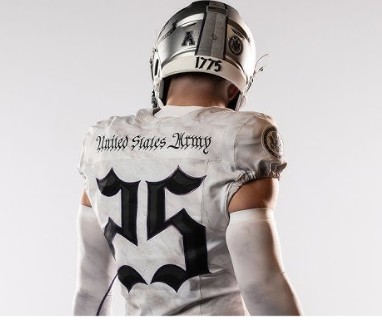
Fraktur and similar blackletter designs never disappeared, however, and since World War II have been widely used by neo-nazis as a link to the Third Reich. Appearing in banners, graffiti and tattoos, they have also crept into mainstream use, as on U.S. Army football jerseys in a recent Army-Navy football game.
In another appearance, Fraktur is used in an ICE recruitment video in which ice agents smash down doors and unleash an attack dog on a suspect. At the end of the video are three phrases: HUNT CARTELS, SAVE AMERICA, JOIN.ICE.GOV.
So, what can we say about typefaces? It’s important to know how typefaces work, why one font works better than another. It’s also important to understand that the typeface you use is part of the message. In some cases, it is the message.
Welcome to EC 101. We hope you will find this course helpful to you in the challenging days ahead.
Intro: Ethnic Cleansing is a useful tool for removing people from your country or community. The beauty of it is, you can use it on the basis of several factors. Race is just one. It also works well with religion, language or politics.
Background: Over the years, EC has been used successfully by many countries and societies to rid themselves of unwanted elements. There are many examples. China, Sudan, Serbia and Rwanda. And of course, Nazi Germany, the country that took EC to its highest level.
In this course you will learn how to put in place the building blocks of a successful EC campaign. But remember. Each step is important if you are to achieve your goals.
Step One: The first step is to identify your target population. Consider the fears and prejudices within your own group. Who don’t you like? Who do you resent? Who are you afraid of? This will lead you to target people who don’t look or speak like you.
Your targets can be a racial group, like Blacks or Asians, or a national group, like Mexicans or Somalis. Or religious groups, like Jews or Muslims. If you’re trying to maintain dominance of a specific demographic, for example, white Christians, any or all of the above can become targets. You can also identify cultural subsets you may wish to rid society of, like gays or transsexuals.
A good place to start is with immigrants. Because they often have a different skin color, wear strange clothing or speak a different language, they will meet most of your criteria for EC.
Step Two: Begin a wide-scale campaign of verbal abuse and dehumanization. This will take time, so it’s important to start early. For example, Adolf Hitler began slandering Jews and calling for their removal as early as 1919. And our president didn’t just suddenly start trashing immigrants. As early as 2015 he was calling Mexicans criminals and rapists. Over time he added to his vocabulary, calling them snakes, blood polluting, and garbage. Descriptions of weird behavior are also effective, like accusing Haitians of eating cats and dogs.
At the same time, it will be helpful to identify with the dominant culture and religion. Tactics might include showing up at religious conferences and prayer breakfasts. Find an opportunity to hold up a Bible and stress your support for posting the Ten Commandments in schools.
Step Three: Marshall all economic and political resources. For this you will need the installation of patriots at all levels of government, from Town Hall to the Supreme Court. Once this has been achieved, you can obtain the legislative, judicial and financial support you will need.
Step Four: Preparation—before you launch your campaign, you must put in place adequate infrastructure for operations, detention and deportation. This takes years to put in place, and involves major construction projects and hiring of loyal personnel. It also will require specific working agreements with private contractors in incarceration and transportation.
You will also need agreements with other countries, who will receive and house your EC deportees. Warning: some countries will want nothing to do with this. Others, like El Salvador, will gladly accept and imprison your deportees if compensated.
Finally, set high goals. Note, for example, the recent goals set by the Department of Homeland Security of arresting 3,000 persons a day.
Step Five: The Launch–It’s important when launching your campaign to develop effective marketing tools. Coming up with catchy names and phrases that can help sell your EC product. Recent examples include the naming of the Florida detention center ‘Alligator Alcatraz,” and the ICE surge into Maine as “Catch of the Day.” Another is the staging of Homeland Security Director Kristi Noem in front of tattooed criminals in cages at El Salvador’s infamous CECOT prison.
Implementation: Now that everything is in place, launch your EC campaign. You now have power. Use it. The worst thing you can do is to appear weak or confused. If you must use violence—know that at the highest level of government, your leaders will back you.
When making arrests, you may need to separate parents from children, or children from parents. Don’t let your feelings get it the way. Focus on the larger good you are doing for your country.
Caution: At some point you may come into conflict with people like you, that is, white Americans, who try to deter or distract you from doing your job. Sadly, they have been indoctrinated by radical, leftist propaganda. As difficult as it is, you must treat them as the domestic terrorists they are.
A useful tip: It’s important when conducting your EC campaign to send signals to the dominant group that you are not targeting them. One way is to welcome white immigrants from South Africa or Northern Europe. This makes it clear that you are not opposed to all immigrants, only those with darker skins.
A final word: Throughout your Ethnic Cleansing campaign, keep your eyes on the prize. Make America Great Again by making America White Again. Conducting a successful EC campaign will require your perseverance and undying loyalty.











 Ben Jacques Stories