Let’s see if I get this right. The Trump administration wants us to have more babies. What with Covid and a declining birth rate, we need more young people to offset those of us with gray hair. We need them to replenish our communities and pay our bills. Trump recently talked of giving a bonus of $5,000 to each new mother.
At the same time his administration is deporting mothers, fathers, and, yes, babies. He is rounding up immigrants, including those who are paying taxes and contributing to Social Security and Medicare. He is breaking up families.
In Harrisburg, Pennsylvania, ICE recently took a mother away from her 1-year-old girl and deported her to Cuba, separating them indefinitely. ICE also deported three children ages 2, 4 and 7 along with their mothers to Honduras. The children are U.S. citizens. The 4-year old has a rare form of cancer.
It’s become clear that Trump’s pro-baby, pro-family approach is meant for one type of family, one type of baby–white families and white babies. And that all this talk about encouraging women to give birth and to stay at home to raise their children is rooted in white nationalist ideology.
What is white nationalism? White nationalism is “advocacy of or support for the perceived political interests of the white population within a particular country, especially to the exclusion or detriment of other racial and ethnic groups.”
White nationalism, along with white supremacy, has always been around. It was behind the enslavement of millions of African Americans. It was behind the Chinese Exclusion Act. It was behind the “separate but equal” Supreme Court decision that affirmed racial apartheid in Southern states. It was given new energy with the re-election of Donald Trump.
Consider the makeup of Trump’s cabinet and advisors. Consider his history of demeaning comments and slurs. Consider the attacks on DEI—diversity, equity and inclusion—and the government’s punitive policies directed towards racial and ethnic minorities. Consider Trump’s revoking of “temporary protected status” for asylum seekers from Haiti and Venezuela.
Consider his shutting down of our refugee resettlement program, stranding thousands of already approved refugees from Africa and the Middle East. At the same time, he has put out the welcome mat for Afrikaners in South Africa, whom he claims are victims of “white genocide.”
Last week 59 white South African “refugees” arrived at Dulles International Airport in Washington, D. C. A photo of them shows young families holding babies in their arms. Deputy Secretary of State Christopher Landau told them: “We’re excited to welcome you here to our country where we think you will bloom.”
All this, while Trump denies a haven to black and brown families fleeing famine, war and persecution.
So what do we do about it? First, we need a stop to the deportations of non-violent immigrants—full stop—and the affording of due process to all. And we need a resumption of our long-standing refugee-resettlement program, applied fairly to everyone.
Second, we need immigration reform. For too many decades, we have let Congress off the hook. The last significant immigration reform came during Ronald Reagan’s presidency, when millions of immigrants were granted pathways to citizenship. The failure of Congress and past administrations to legislate common-sense reform has victimized millions of our neighbors, who want nothing more than to build lives for their families in a safe and free country.
As for the Administration’s push to have more babies, I say let’s protect the babies we have, and their parents and siblings–refugees, asylum seekers, DACA enrollees, immigrants. They are part of our communities. We need them. Diverse, multi-cultural, hardworking, creative, they, with us, can build an American future based not on white-nationalist ideology, but on equal opportunity for all people, regardless of race, ethnicity, gender or religion. A future aligned with our Declaration of Independence and Constitution.
I was wondering about this when I heard that federal and school programs labeled as DEI—that’s diversity, equity and inclusion—are being defunded.
I’ve always been taught that diversity, equity and inclusion are good things, that they are fundamentally American things. DEI has made us who we are, a nation of and built by immigrants, unlike any other, “dedicated to the proposition that all men are created equal.”
As Americans, we brag about our diversity—our inventors, scientists, athletes, musicians and artists. Without diversity, we become a monoculture, and monocultures aren’t healthy, as all farmers know. Monocultures may bring quick profits from scale, but leave the soil depleted. Cotton, for example. Or potatoes. Reliance on one variety of potatoes in Ireland led to disease and starvation.
It’s the same with people. Homogeneous societies flourish for a time, then grow stale. Institutions lose their vitality. Birth rates decline. Meanwhile, societies that welcome diversity, that plan for diversity, advance, benefiting from the rich cross fertilization of talents and ideas.
DEI is also expressed in our religious beliefs. We celebrate a God who creates diversity, who loves all equally, and leaves no one out.
So, what’s up with this anti-DEI stuff?
Other words long considered positive, like “science” and “education,” are also suspect. It’s becoming dangerous to look at things too closely, like climate, for one. Or history.
Which brings us to the word “woke.” Despite its mainstream use today, it’s been around for at least a century. It stems from African-American vernacular, meaning awake. It was used to describe those with a heightened awareness of social and political issues, especially race and inequality.
Today it’s used in derision. To be woke is to be part of the radical left, if not communist. You are “woke” if you advocate for minorities, including women and LGBTQ. You are woke if you teach your students how to think critically. You are “woke” if you pay attention to global warming.
Then there is the word “empathy,” a necessary capability for living in community. Without empathy individuals look out only for themselves. They ignore the suffering of others and tolerate systems of abuse. Yet, even this word has taken on negative connotations.
According to the political right, having too much empathy, or empathy for the wrong people, is a problem. It’s called “toxic empathy.” When the Rev. Bishop Mariann Edgar Budde at the National Cathedral on Jan. 21 called on President Trump to have empathy for immigrants and LGBTQ community, she was accused of expressing toxic empathy.
I recently visited a web site that offers support for those suffering from toxic empathy. Having empathy can be stressful and wear you out. It can keep you from taking care of yourself.
The underlying message is, learn to control your empathy. Unchecked, it will deter you from your own goals and may bring you into conflict with your religious or political beliefs.
Meanwhile, some words considered bad are now heard as good. Tom Homan, Trump’s deportation enforcer, talks of “bringing hell to Boston.” Trump tells his supporters, “I am your retribution.” He calls African countries “shitholes,” and women who oppose him, “nasty.”
No wonder public discourse has become so polluted.
Words are important, as is the way we use them. I propose that we continue to celebrate DEI, diversity, equity and inclusion. And that we make it our business to stay woke, that is, awake to the world around us. As for empathy, we need it now more than ever.
Rumeysa Ozturk, a doctoral student at Tufts, is grabbed off the street and flown to a prison in Louisiana. In Boston a man is nabbed while leaving the courthouse. In New Bedford, ICE agents smash the windows of a car to arrest someone with no criminal history. In Chelsea, Boston, Worcester, Medford, Wakefield and other cities, hundreds have gone missing, picked up by ICE in raids.
Meanwhile, immigrants, including those with temporary protected status (TPS), are afraid. Children don’t want to go to school for fear their parents won’t be there when they return home. Community leaders talk of a siege mentality.
Since a 2017 ruling by the state Supreme Judicial Court, Massachusetts has limited its cooperation with the federal government’s deportation efforts. As Stoneham Police Chief James O’Connor puts it: “Being in this country without legal documentation is a civil offense. Massachusetts police officers do not have the jurisdiction to enforce civil immigration law.” The only exceptions are in cases of criminal activity or threats to public safety.
In a policy statement, Chief O’Connor stated: “Stoneham Police will afford all residents all civil rights, due process, and equal protection safeguards available under the U. S. Constitution, the Massachusetts Constitution and Town laws, ‘irrespective of the person’s immigration and/or documentation status.’”
Regardless of state and local policies, our immigrant neighbors are increasingly threatened by a Trump administration that has shown no regard for rules or, for that matter, First Amendment rights.
For this reason, four bills are now at the State House that would increase protections for immigrants in Massachusetts. They are sponsored by various state reps and senators and supported by the ACLU, MIRA and numerous organizations.
The first is the Safe Communities Act. It would prohibit voluntary involvement of local police and courts in civil immigration matters and require “informed consent” before any ICE interview can take place.
The second bill is the Immigrant Legal Defense Act. Studies show that immigrants are five times more likely to win relief from deportation if they are represented by a lawyer. This act would provide funds for free legal defense for at-risk immigrants, especially those in federal detention.
A third bill at the State House, the Language Access and Inclusion Bill, would expand translation and interpretation for Massachusetts residents. This is especially important as the federal government is pulling back from communications except in English.
A fourth bill in Boston would prohibit contracts with the federal government for detention facilities in the Commonwealth, such as the Plymouth County Correctional Facility, which currently holds hundreds of immigrants awaiting deportation.Fact sheets on all four legislative proposals can be found online at the Massachusetts Immigrant and Refugee Advocacy Coalition at miracoalition.org.
This week, members of Stoneham for Social Justice, a network of concerned citizens, endorsed these four bills and called on state legislators to support and fast track them.
In Massachusetts there are an estimated 250,000 undocumented immigrants, individuals and families who have sought a safe place to work and live. Thousands more have fled oppression and disasters under programs that grant them protective status. For many, including Venezuelans and Haitians, this status is being revoked.
Immigrants among us, our families, our neighbors, those we work with, those who provide services to us, are part of our daily lives. They play an integral and productive role in our communities. At the very least, they deserve the rights guaranteed to all in our Constitution, including the right to fair hearings and due process. When these are threatened, they deserve our protection.
As we celebrate our town’s 300th birthday, reflecting on our founding in 1725, you may have wondered, who was our first employee?
Well, it seems we were rather selective, because the first person we hired was a graduate of Harvard. But before I tell you who it was, here’s some historical context.
In 1725, as we broke away from Charlestown, we were just a village ten miles north of Boston in a colony called Massachusetts Bay. Massachusetts Bay was founded in 1630 by English Puritans led by John Winthrop, who became its first governor.
The Puritans, who had separated from the Church of England, were a serious lot. They based their customs and laws on English Common Law and the Bible, especially the Old Testament.
They also believed that church and state should function as one, and that’s why, as stated in the founding document, the town was required to find, install and support a minister. That person would become the first paid employee of the Town of Stoneham.
That person was James Osgood and he came from Salem. When the words “Puritan” and “Salem” are mentioned in the same breath, it is not unnatural to think of witchcraft, and the trials and executions of the late 17th century. For the Osgood family, some of whom lived in Andover, the connection was personal. In 1692 James’ paternal grandmother, Mary Clements Osgood was accused of being a witch.
Mary Osgood’s story is too long to tell here. Suffice it to say, she confessed in 1692, under considerable pressure, of making a pact with the Devil and afflicting several other women and was subsequently imprisoned in Salem. But under examination by the Rev. Increase Mather, who had been sent to Salem to reign in the witchcraft hysteria, she recanted her confession and said she had made it all up. You can read about it in the report made by Governor Thomas Hutchinson. Meanwhile, over 50 citizens of Andover had petitioned for her release, and she was freed.
One of Mary’s sons was Peter Osgood, a tanner, who did so well that he sent two sons to Harvard, the younger one being James. One other thing I should mention is that the Osgood family owned slaves. Owning slaves was not common in colonial Massachusetts, but neither was it exceptional. For an enterprising farmer, seaman, merchant or tradesman, owning a slave could make the difference between just getting by and prospering. A 1754 inventory of enslaved persons age 16 and over in Salem listed 83. There were 989 in Boston. Eight in Stoneham.
Growing up in Salem, James Osgood followed his brother to Harvard. From what we know, he did well. At one point, however, he appears to have gotten into trouble. In a biographical sketch of Harvard graduates, we read that “James found himself caught up in the student riot of 1722 at Harvard, managing to break glass to the value of 11 shillings.” My guess is, he smashed a window.
But time can make a difference, as the parents of any college student know. By the time James graduated with a master’s degree, he was described as “one of the soberest and quietest members of his class.”
Looking for Employment
When James Osgood graduated from Harvard in 1727, he must have wondered what the future would hold. The youngest son of a Salem tanner and church deacon, he had earned a master’s degree, placing him into the upper echelon of Puritan society.
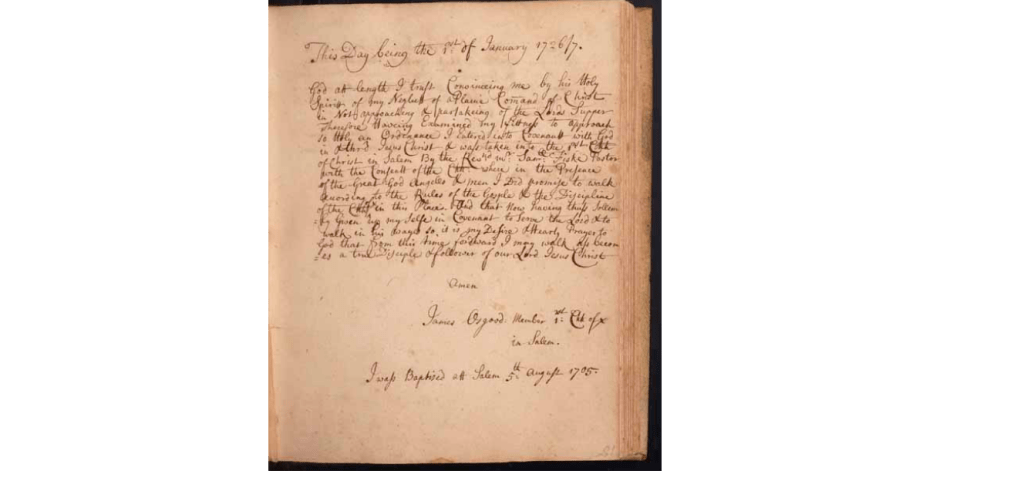
A few months before his graduation, there had been a turning point. An entry in his diary from this period stands out. It’s dated Jan. 1, 1727. It seems James had stopped taking Communion in church. Had he, a college don studying Greek and Latin, entertained doubts? Had he grown skeptical?
For whatever reason, as he now wrote, he repented his neglect of the sacrament and promised to “walk according to the Rules of the Gosple & the Discipline of the Church.” From now on, he covenanted, he would “walk as becomes a true Disciple & follower of our Lord Jesus Christ.”
After graduation, Osgood left Cambridge and returned to Salem, where he began looking for employment. One of his first jobs was teaching school in Salisbury, for which, records show, he received 30 pounds. He was also called on to fill the pulpit as a guest preacher in nearby parishes, giving him valuable experience.
In the fall of 1728 the young theologian received an invitation from the newly incorporated town of Stoneham, which was searching for its first minister. To audition for the job, Mr. Osgood would have to preach in front of the whole town, around 65 families, and get the approval of town voters, all 13 of them, men only. Other candidates would also be invited.
Meanwhile, in Stoneham “it was voted in town meeting assembled to set apart a day for prayer to ask God’s direction in the choice of a minister” (William B. Stevens, The History of Stoneham).
James Osgood was only 23 when he came down from Salem, probably on horseback, to audition for the job. What must have gone through his mind as he entered the simple structure of the Meeting House, erected by the townspeople just three years earlier, and stood before the small congregation. We can only imagine his looks and manner, and the sermon to follow. We can assume he made a powerful impression, because he got the job.
Was it a hard choice for him to make? I wonder when I read that it took him until April to formally accept. Nevertheless a few months later, on Sept. 10, 1729, he was ordained and installed in the Meeting House as Stoneham’s first minister.
All things considered, it was not a bad job. The town voted him an annual salary of 110 British pounds (about $22,000 today). It also gave him 172 pounds ($38,000) “for a settlement,” and agreed to supply him with ten cords of wood for heating and cooking.
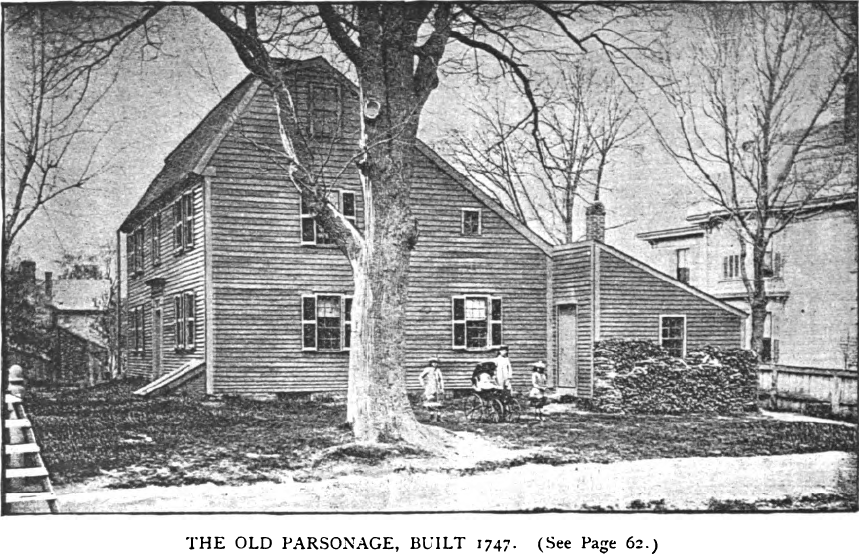
At first boarding at the home of Peter Hay, a prominent town citizen, the young bachelor set about ministering to the families of the parish. Besides preaching two or more sermons a week, his duties included teaching, baptizing, counseling and consoling. He conducted weddings and funerals. And he began plans for a parsonage. As Stevens records: “Mr. Osgood purchased land and built him a house which was a fine one for those times.”
A photograph of the parsonage, taken in the 19th century, shows a large house in the traditional saltbox style. Nine windows face the street, and a storage shed is attached at the rear. Cord wood is stacked on the side, and children play in the yard.
We don’t know when the house was completed, but it may have been before 1735, when Osgood, now 30, returned from Killingly, Connecticut, with his new bride. Her name was Sarah Fiske and she was 17. In Stoneham, the couple would have two children, Abigail and John.
From William B. Stevens’ History of Stoneham, 1891.
The Reverend’s Account Books
On August 6, 1729, James Osgood started recording his expenses in two books, preserved in the Congregational Library in Boston. These daily accounts give us clues into the 24-year-old Harvard graduate from Salem, ordained in October as Stoneham’s first minister.
The entries, made in his own hand, are various and include lists, like what books he was reading, the founding of Puritan churches in Massachusetts Bay, and commentary on historical and theological matters. They also record payments received, like one of 56 pounds from Daniel Gould, town treasurer, half of his yearly salary.
Another shows Osgood paying 49 pounds, then another 50, to “Mr. Ebenezer Phillips, yeoman,” for the purchase of land. Below that is payment made to Francis Kittridge–12 pounds, 16 shillings and 6 pence—for 1,000 board feet of lumber for construction of his house.
Most of Osgood’s purchases, however, are for daily necessities, such as 16 shillings paid to David Gould for a bushel of corn. There are also payments for rye, sugar, molasses, tea, salt, beef, veal, and fish. Also, cotton, wool, linen and eiderdown, as well as kettles, tallow and other houseware items. And there are regular purchases of rum.
We also see a stream of payments for workmen building the parsonage. Others for plowing, hauling manure, planting and mowing. There are purchases of animals, including a pig. A payment is made to have Osgood’s horse shod.
Then there are payments for services rendered, like weaving and shoemaking. In one entry, the minister pays Simon Barjona, a cordwainer, one pound for a pair of shoes.
After his marriage to Sarah and the arrival of children, we see purchases that reflect his family, such as a handkerchief, silk, a looking glass and a pair of stockings for Sarah. Also a buckle and a new hat for Johnny, and a frock for his daughter, whom he calls Nabbe.
We find regular payments made to Abigail, the household maid. To employ a household maid must have made a huge difference to the family, especially for Sarah, whose duties as the minister’s wife would have gone beyond household management and raising children. She would have been called on to support her husband’s ministry in various ways, counseling the women and children, visiting the poor and the sick.
In October of 1743, however, payments to the maid cease. From November through January, no further payments are found. For whatever reason, Abigail is no longer employed. It appears the Osgood family is without household support.
In February that is about to change in a way that we, looking back three centuries later, find disturbing. On Feb. 21, 1744, Osgood writes: “Paid away for a Negro woman named (Fibbe) to Mr. Thomas Bancroft, 20 pounds.”
Osgood’s payment of 20 pounds was just a down payment. In March he will make a second payment of 12 pounds. Then in April, as he notes in his account book, “paid for my Negro woman in full, 43 pounds”—bringing the total to 75 pounds.
Reading this, I am stunned. Yes, I’ve known that many prominent families in colonial New England owned slaves. But this feels personal. It is my church, the First Congregational Church, founded in 1729, and in my town, which this year celebrates its 300th Birthday.
How could the minister of my church be a slave owner? Next week, I will conclude my story of the Rev. James Osgood. I’ll tell of his sudden demise and what happened to his family and his enslaved servant, Phebe.
Page 26 of James Osgood’s Account Book for the year 1744.
A Slave in the Parsonage
When James Osgood in 1744 brought home a Negro woman he had purchased, few in town would have questioned his actions or his ethics. Slavery had sprung up in the Massachusetts Bay Colony soon after its founding in 1630. English colonists had initially enslaved natives captured in battle, but found them too difficult to manage.
In 1637 the slave ship Desire, built in Marblehead, left for the Caribbean with 17 Pequot natives, including 15 children, to be sold to Caribbean plantations. Eight months later, the ship sailed into Boston with a cargo of cotton, tobacco and slaves from Africa.
In 1641 the Puritan community published The Body of Liberties, which spelled out rights and obligations of its members. Article 91 sanctioned the owning of slaves.
In Stoneham, as throughout New England, having slaves signaled a family’s success and status. Among owners were merchants, tradesmen, land owners and ship captains. There were also ministers, like the eminent Puritan minister, Cotton Mather, in Boston. Or like James Osgood.
The minister’s own family, his father, Peter Osgood, and uncles, owned slaves in Salem and Andover. When James Osgood arrived in Stoneham, he first boarded with Captain Peter Hays, who kept two slaves. At one time or another, at least eight Stoneham families owned slaves.
Osgood believed, as did Cotton Mather, that it was the duty of slave masters not only to treat their slaves kindly, but to Christianize them, thus to save their souls. In Stoneham, writes Stevens, “The colored people, though in a state of slavery, were admitted as brethren and sisters to the church.” Welcome in the Meeting House, they were restricted, however, to sitting in the balcony.
Church records show that Osgood “received” several slaves into full communion. Among them were “Amos, Negro servant of Deacon Green” and “Pomfrey, Negro servant of Mr. Sprague.” The minister also officiated at their weddings. In 1738 he blessed the marriage of Mingo and Moll, “servants” of Peter Hay, Jr.,” and in 1743 of “Obadiah How, Negro servant of Mr. Souther, married to Priscilla.”
The Puritans in Massachusetts had rejected the rigid hierarchy of the Church of England and instituted congregational reforms that gave the common person more say in church and society. Yet they continued to see themselves as part of the Great Chain of Being, which described their place in the natural order. At the bottom of this chain were natives and Africans.
So it was that Phebe, the woman Osgood had purchased for 75 pounds, was expected to serve the family in perpetuity. Regardless of the degree of kindness shown her, she must labor with no pay and no hope of freedom.
What would eventually happen to Phebe, however, the Stoneham minister would never know, because on March 2, 1745, a few months shy of his 40th birthday, the Rev. James Osgood suffered a fatal stroke.
James Osgood had served the people of Stoneham for 16 years, and his sudden demise must have shocked the town. William B. Stevens writes: “His body was carried to the Meeting House and there attended to grave by several ministers and a great Concourse of People.” He was laid to rest in the Old Burying Ground on Pleasant Street.
For the minister’s family, the loss was enormous. John, his son, was only 6, and his sister, Abigail, 9. Details about the family after his death are few. John Osgood grew up in Stoneham and married Lucy Torrey, and they had one daughter. He then married Jane Libby on January 2, 1781. He died in 1792 in Boston at the age of 53.
Abigail, their daughter, at age 15 married Joseph Bryant, Jr, in Stoneham. He would later fight in the Revolutionary War. They had five children. Abigail lived a long life, 89 years, and died in 1826 in Stoneham.
Sarah, town records show, remarried in 1752 to a Captain Ralph Hart of Boston. She, too, lived into the next century. When she died in 1801 at age 83, she was buried beside her first husband in the Old Burying Ground. In his Brief History of the Town of Stoneham, Silas Dean described her as “a very amiable and excellent person.”
As to what happened to Phebe, the Osgood’s household slave, I found two pieces of information. The first is her mention in the inventory of the Osgood’s belongings, made after his death. The inventory list is chilling, because tucked between items like “A looking Glass, 2 oval Tables, a Desk and Tankard board” and “A bed and furniture, a low Chest with Draws & a Table” is the entry: “A Negroe Woman, 70 pounds,” valued at five pounds less than her original purchase price.
The second is from Stoneham vital records for 1747, two years later. It noted the marriage of “Phebe, servant of Mrs. Sarah Osgood, and Quecoo, servant of Peter Hay, 3d, Mar. 12, 1747.” I could find no further information.
As we look back to our founding, we view it from afar. When Reverend Osgood arrived from Salem, Stoneham had just incorporated as a Puritan community in a British Colony. Yet it was in those times that our town was forged. What followed was earth shaking, the Revolutionary War and the creation of a republic inspired by the Declaration of Independence. Soon after, in 1780, came the Massachusetts Constitution. Authored by John Adams, it became the model for the U.S. Constitution. It was also the basis for the Massachusetts Supreme Judicial Court ruling in 1783 that ended slavery in the Commonwealth. In the first federal census of 1790, there were no enslaved persons in Stoneham.
For history to have value for us, we must do our best to tell it with honesty. We must acknowledge its complexity. This shouldn’t deter us, however, from paying tribute to the founders of Stoneham, including our first minister and first employee, the Rev. James Osgood. We also pay tribute to all those, enslaved or free, who helped build our town.
Come plant a rose for Cesar, And pick a rose for Delores. Sing a song of peace and justice, Sing aloud de colores.
In a river town called Yuma Cesar’s family farmed the soil, But a banker grabbed their deed, What they’d earned by sweat and toil.
So they loaded up the Studebaker Joined the migrants going west, Picking peaches, hoeing lettuce In the hot sun with no rest.
Years later in Sal Si Puede, Meaning: get out if you can, Cesar, with his new wife, Helen, Chose to make a stand.
He was joined by Delores Huerta, A teacher with a heart of fire. In Delano they formed a union. Si, se puede, is still the cry.
In the valley San Joaquin Filipinos pruned and picked the vines, Getting paid less than braceros, They soon formed a picket line.
Yes, said Cesar, we will join you. We will strike for decent pay. Until the growers sign a contract, On the vines the grapes will stay.
So the workers fought for rights, Marching, singing, organizing, Facing violence, hunger and low wages, Beat down, they kept on rising.
Fought for toilets and clean water, Long-handled hoes so backs wouldn’t break, Housing, health care, and old-age pensions, All that’s due for fairness sake,
For the children, for the parents, Campesinos proud and strong, Bringing us each day our food, Teaching us the justice song.
And still the fight continues. Pesticides still make us sick. Growers, politicians, attack our union Sowing seeds of harsh conflict.
But united we fight on. La Causa is our way of life Until all God’s children work together, Free of fear and want and strife.
Can’t you see the smiles of children? Can’t you hear the songs they sing? Songs of flowers, birds and rainbows, Songs of letting freedom ring.
Things go better with a contract A flower grower one day said. Then to honor Cesar Chavez, That brave Chicano man who led,
They named a new rose after him, A rose deep red so all would know That those who own and those who pick Can jointly sew the seeds of hope.
So plant a rose for Cesar And pick a rose for Delores. Sing a song of peace and justice. Sing aloud de colores.
De colores, de colores se visten los campos en la primavera. De colores,de colores son los pajaritos que vienen de afuera.
De colores,de colores es el arco iris que vemos lucir. Y por eso los grandes amores de muchos colores me gustan a mi. Y por eso los grandes amores de muchos colores me gustan a mi.
I grew up in a fundamentalist Christian home. Keeping God’s law was a big thing, especially the Ten Commandments. So when I hear Christians today talk about how all these undocumented immigrants are law breakers who must be deported, I know where they’re coming from.
For many Christians, especially white Christians, it doesn’t seem to matter that being in this country without documentation is a civil infraction, not a crime. To them, it’s criminal, deserving of the harshest punishment. It doesn’t matter that parents are taken from children, or that asylum seekers find themselves in prisons in another country.
Neither are many religious people bothered that most immigrants, including families, are here for one reason: poverty, war or threats to their safety in their country of origin.
They should have come in the right way, they say. Yet, within our broken immigration system, we know there is no right way. And now we see that even those here legally, such as those under temporary protected status (TPS), are ordered to leave the country. These include immigrants from Haiti, Venezuela, Cuba and Nicaragua.
Even those with green cards, authorizing them as permanent residents, are being singled out and deported.
Yet not all Christians support President Trump’s orders and policies. And there is increasing evidence that many who voted for Trump are now recoiling from his cruelty.
Meanwhile, others are calling for a return to the commandment of Jesus in the New Testament: “A new command I give you: Love one another.” Sometimes called Matthew 25 Christians, they turn to the Sermon on the Mount and the Parable of the Last Judgement to stand up against Trump’s cruel policies.
Whatever happened to “I was hungry and you fed me. I was a stranger and you welcomed me”? they ask. What about, “In as much as you have done it unto one of the least of my brethren, you have done it unto me”?
They are joining those from other religions or none to demand a stop to the indiscriminate deportation of immigrants, refugees and asylum seekers. They are insisting on safe homes and communities for millions threatened by arrest and detention.
And they are a calling for a new law, such as one filed last week by Representative Sylvia Garcia of Texas. Co-sponsored by 201 members of Congress, the Dream and Promise Act would provide a pathway to US citizenship for most DACA recipients, other Dreamers, and those on Temporary Protected Status or Deferred Enforced Departure. In short, it would allow millions of our friends and neighbors to continue living, working and going to school in our country.
In a democracy, it is the duty of all to obey the laws. Yet, when a law is unjust, when it goes against our most deeply held beliefs and convictions, it is the duty of citizens to create a better law. For too many years, that has not happened. Now is the time to stop mass deportations. Now is the time to craft new immigration laws. Now, even in the midst of the storm.
This is a story about Charles Cephas, a Black man who came to our town after the Civil War. On his gravestone in the soldiers’ lot at Lindenwood Cemetery, you’ll see he served in the U. S. Navy.
Charles was born in 1844 in Norfolk, Virginia. He may have been enslaved. One year after the Emancipation Proclamation, he joined the Union Navy and was inducted aboard the USS Ohio in Boston. He was then assigned to the USS Sacramento, which served to blockade Confederate ships off South Carolina and in Europe.
Discharged after the war, Cephas settled in Stoneham, Massachusetts. On August 13, 1867, as reported in the Stoneham Independent, he appeared before Silas Dean, justice of the peace, with his bride. Her name was Sarah Cecelia Hill, and she was from Brooklyn. He was 23, she was 18. In Stoneham they would raise five children, three sons and two daughters.
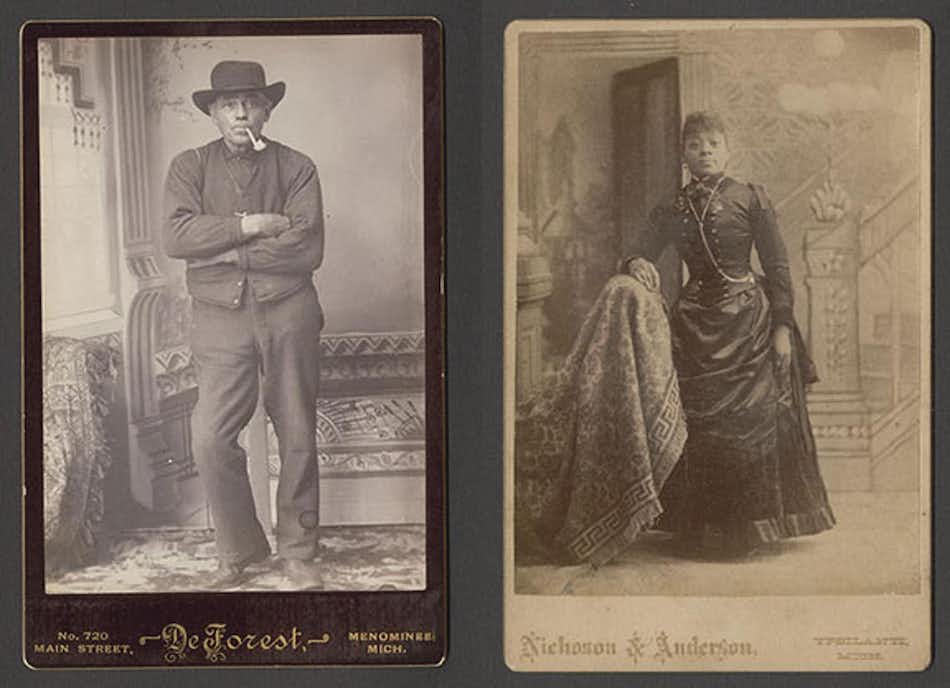
I don’t know what Charles Cephas looked like, but he must have been a man of considerable strength. I say that because he was a mason, a well digger, an earth mover. An ad in the Stoneham Independent reads: “The services of Charles Cephas stone mason can now be had. He tends to laying pipes, sinking wells, digging cesspools and blasting. ‘He thoroughly understands his business.’”
That same year the newspaper reported that “Charles Cephas is digging and stoning a well in Montvale, which he thinks will be the deepest in Woburn. It is 35 feet deep.”
In the 1870 federal census, Charles and Sarah are two of only 27 “non-whites” listed in a town of 3,444. Yet, from what I can find, they did all right, and by 1876 purchased their own home. In the Independent, we read: “Wm. Howell sold a house on Hancock Street to Charles Cephas, and the latter had had it successfully moved to Albion Ave in the north westerly part of the town. Ellis of Malden did the moving.”
But life for the Cephas family had its rough parts. And here the story gets complicated. It’s complicated, because if we are to know the tenor of Charles Cephas’s life, we must acknowledge the persistent prejudice African Americans faced, not only in the South, but in booming factory towns like Stoneham. His story raises questions that make us uneasy.
Most of what we know about Cephas comes from the Stoneham Independent. There are also census reports and vital records. We also have notices of court actions, arrests and fines. Sometimes, we have to read between the lines.
I don’t know if Charles was enslaved in Virginia. He may have been. Certainly, his desire for freedom, his enlistment in the Union Navy, and his insistence that he be respected as a free man played out in his daily life. He didn’t always get respect.
Cabinet card portraits of African Americans from the David V. Tinder Collection of Michigan Photography. Left: Man with Pipe, circa 1887. Right: Woman in Silk Dress, circa 1888. William L. Clements Library
Disturbing the Peace
Although Charles Cephas found Stoneham a good place to start a business, a place where hard work was rewarded, he was also learning that even in the North men who looked like him could become targets of abuse.
In 1878, as reported in the Independent, five men, aged 16-25, attacked and beat Cephas and Thomas Shanks, another Black man. Arraigned in court for assault and battery, the men were fined and released.
There were other times, however, when Cephas was the one being charged. For example, in 1891 at the P Cogan & Sons shoe factory on Main Street, where he was arrested for disturbing the peace.
According to the Independent, Charles Cephas was walking beside the Cogan plant when, from an upstairs window, someone dumped a bucket of whitewash onto him. Furious, he rushed into the mill in search of the culprits. Not surprisingly, no one admitted the racist prank. Cephas was “pretty well worked up,” wrote the reporter, “and may have talked pretty loud, for Officer Newton appeared on the scene.”
Rather than find the perpetrator, however, the officer “arrested Charles and started for the ‘lock-up.’” When Cephas resisted, the policeman enlisted “one or two outsiders for aid” and hauled him off to jail.
Another time, according to the papers, Cephas threatened to blow up the Stoneham police force. The Boston Globe, which picked up the story, told it like this:
Early this morning an officer saw a young man chasing a girl along a street. The latter was shouting for assistance. The officer hailed the man, who stopped and was informed that he was under arrest. The man, who proved to be Charles Cephas, refused to be taken into custody and opened a handbag he carried, and told the officer the contents were dynamite, and if he was molested he would explode the same.
The Independent gave more detail, alleging that Cephas, uttering profanity, had chased a “Miss Kelly” to the home of Officer Green, where she sought protection. Green and another officer confronted Cephas, who was standing in the street, and told him to go home or be arrested. Cephas started, but then stopped, warning the officers that he had dynamite in his bags and would blow “the whole —- police force up” if they came near.
On Monday Cephas showed up in court and paid a fine of $10 for disturbing the peace. He told the judge that he couldn’t remember threatening “to blow up the police force,” but if he did, “he was sorry.” No mention was made of the altercation between Cephas and the young woman.
Looking back at Charles Cephas, we see a puzzle with many pieces missing. We will never get a full picture. Still, what we have suggests the complexity of his life in our town. We also learn a little about his family, about their losses and achievements.
In 1869 the Independent listed the death of a son, age 1. Infant deaths were also recorded in 1874 and 1883. In the notes section of an 1885 edition, we read: “Mr. Charles Cephas has had the misfortune to lose one of his youngest children lately.”
In October of 1884 Sarah (also known as Cecilia or Celia) posted a card thanking family friends in Woburn, Wakefield and Stoneham “for their many kindnesses and sympathy in her late bereavement.”
But there were also good times, such as the wedding of their son, George, to Carrie H. Yancey. It was “a very pretty home wedding” reported the Independent, “performed in the presence of a large company of friends.”
In another story we learn about an ice-hockey game on Spot Pond in which the Stoneham team beat Salem 1-0. The ice was rough, the paper reported, due to the many ice yachts that had been racing on the pond. Playing with the Stoneham team was Ernest Cephas, George’s brother.
There is evidence that the Cephas boys learned shoemaking trades. Ernest, however, seems to have something else in mind.
In 1887 we find out that Ernest has gone to sea. Like his father, he enlisted in the Navy. Home on leave in 1896, wearing his sailor’s uniform, he was returning from Woburn late one night when he was accosted by several toughs, who berated him with racial slurs.
Getting off the trolley at the last stop, Ernest stepped up to the gang leader “and lit into him like a cyclone,” giving him “such a pummeling as he probably never had in all his life.”
Although Ernest was later charged in court, the Independent clearly took his side. The headline ran: “He Deserved It!—Ernest Cephas Teaches a Haverhill Tough a Wholesome Lesson.”
Two years later, during the Spanish-American War, Ernest was serving aboard the Navy cruiser USS Brooklyn. In a letter published by the newspaper, he described in dramatic detail a victorious battle between American and Spanish warships.
Of the Cephas’ third son, Louis, born in 1876, we know very little. His name does appear, however, in a news report of the 1904 trolley car disaster in Melrose. Lewis was riding in the car when dynamite carried by workmen exploded. Nine passengers were killed and 30 wounded. Blown into the street, Louis survived with cuts and bruises from flying glass and debris.
Of the two surviving daughters, Eva, born in 1883, and Sarah, born in 1887, there is also little information. Records show that Sarah married John Addison in Boston in 1912, and that Eva married a man with the last name of Carter in 1913.
Coming Home
Charles and Sarah Cephas were not the only African Americans to settle in Stoneham after the Civil War. There were also the Yanceys, Freemans, Reeds and others. In the Independent, we find mention of “a Mr. Curtis and a Mr. Turner, [who] owned adjoining lots on Albion St. in 1874.” Also noted was the Lewis family, “that married into the Yancey family.”
For the Black families, Stoneham was a good place to put down roots. But the soil could also be rocky, in more ways than one. For Charles Cephas, getting along in an overwhelmingly white community inevitably involved conflict.
On at least one occasion, reported in the press, he was assaulted. Other times, he was charged with disturbing the peace, including the time workers at a shoe mill dumped whitewash on him.
His marriage was another story. We can never know the complexities of any marital relationship. But the stresses of his life must have crossed over to his marriage. In the Independent on March 9, 1895, we learn that Sarah Celia Cephas, after 28 years, has petitioned the Middlesex Court for divorce and that “a decree of divorce was given.”
Sometime after this, Cephas moved out of Stoneham. In 1899 we find him living in Chelsea and working at the Charlestown Navy Yard, where he continued for another nine years. Until June 10, 1908.
What happened on that date is unclear. It was not reported on, as far as I can tell, by any Boston papers. Nor, does it seem, were the police involved. It was, however, reported on by the Independent. Here is what the Stoneham newspaper said on Saturday, June 20:
Charles Cephas, colored, passed away Wednesday evening of last week, at the Chelsea Marine hospital, as the result of injuries received by being assaulted as he was coming out of the Charlestown Navy Yard, where he has been employed as a stone mason. He was about 65 years of age.
The paper then speculated that “the object of the assault was robbery, his assailants evidently being after Mr. Cephas’ pension money.”
After listing the five names of his surviving children, the Independent continued:
The deceased was a Civil War veteran, having served four years in the Navy. Until about 15 years ago he was a resident of this town for thirty years. He was born in Virginia in ante-bellum days.
Funeral Services for Cephas were held in Chelsea. But for burial he was brought back to Stoneham, interned in the Civil War memorial lot at Lindenwood cemetery. Was there an honor guard present, as there often is for veterans? No mention is made.
Looking back at the demise of Charles Cephas, we are left with questions. Why did his brutal murder in Charlestown receive so little attention? Was there no police report? Was there no attempt to apprehend and prosecute his killers?
I was able to find the Chelsea coroner’s report, filed a week after his death. The cause of death was listed as “acute fibrinous pneumonia consequent on hemorrhage and laceration of the brain sustained under circumstances unknown, probably those of an accidental fall.” Accidental fall? Really?
Back in 1891, when Cephas was still living in Stoneham, the Independent reported that “People on the outskirts of town complain of dry wells. Will it ever rain in earnest?”
In that same issue was the news of Charles Cephas digging a 35-feet-deep well, “the deepest in Woburn.”
When I think of Charles Cephas, I like to think of this.
Charles Cephas came to Stoneham looking for a place he and his family could call home, and in doing so, he helped build our town. Although his story is complicated by factors we can only partially understand, it challenges us to look honestly at history and ourselves.
His story is part of our history. It is our story as well.
Gravestone of Charles Cephas in Lindenwood Cemetery
Thanks to Joan Quigley, historian and archivist at the Stoneham Historical Society & Museum, and Dee Morris, Medford historian, for their help in researching the Cephas family.
Ben Jacques is the author of In Graves Unmarked: Slavery & Abolition in Stoneham, Massachusetts, and If the Shoe Fits: Stories of Stoneham Then & Now. Both are available at the Book Oasis on Main Street. He also writes essays, poems and articles, many of them found on his blog at benjacquesstories.com.
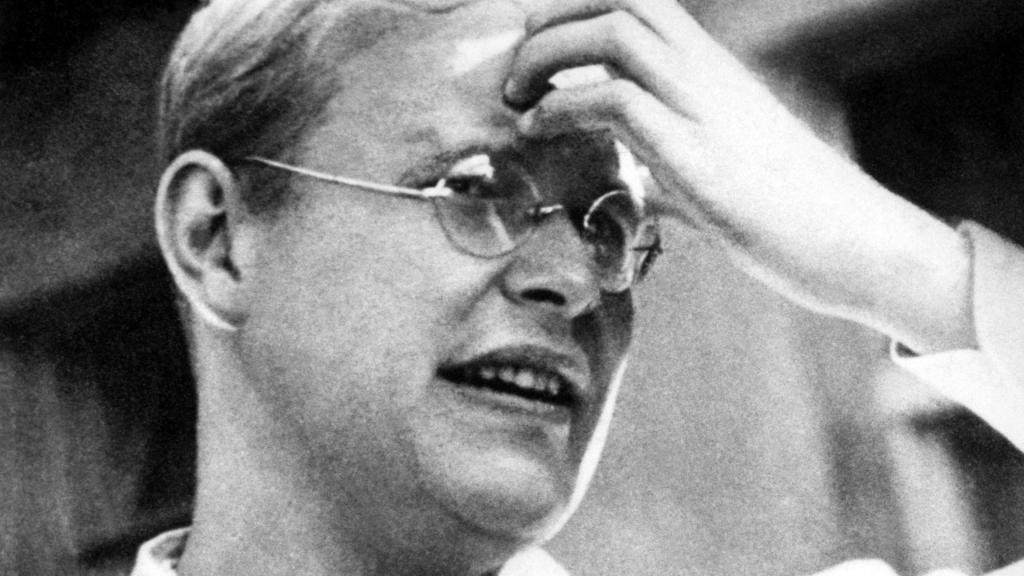
As the German pastor, Dietrich Bonhoeffer, wrote: “Only the person who cries out for the Jews may sing Gregorian chants.”
What does this mean to us today, almost a century after the rise of the Nazi Party in Germany? Here’s my take.
If you don’t cry out against those who are taking food from the hungry, taking medicine from the sick, or shelter from the stranger—you have no moral right to sing your hymns or pray your prayers.
If you are not horrified by the cruelty of Donald Trump and his administration, the cutting off of aid to the poor and sick, the “chainsaw” firing of workers, the slamming of the door to refugees, and the deportation of those whose only crime is seeking a place of safety, I urge you to reexamine the principles you live by. I urge you to reacquaint yourself with the words of the One you claim to follow.
As Pastor Bonhoeffer said: “Christianity stands or falls with its revolutionary protest against violence, arbitrariness and pride of power and with its plea for the weak. Christians are doing too little to make these points clear rather than too much. Christendom adjusts itself far too easily to the worship of power. Christians should give more offense, shock the world far more, than they are doing now. Christian should take a stronger stand in favor of the weak rather than considering first the possible right of the strong.”
Woodie Guthrie wrote the lyrics. Martin Hoffman set them to music. Since then, it’s been sung by Bob Dylan, Joan Baez, Johnny Cash, Dolly Parton, Bruce Springsteen, Pete Seeger and Arlo Guthrie.
It’s a ballad called “Deportees” and it tells of an airplane crash in California’s Los Gatos Canyon. On board were 28 migrant farm workers from Mexico.
The lyrics are as searing now as in 1848 when Guthrie wrote them:
The sky plane caught fire over Los Gatos Canyon, A fireball of lightning, and shook all our hills, Who are all these friends, all scattered like dry leaves? The radio says, “They are just deportees.”
Guthrie wrote the ballad one night after news reports listed the names of the pilots, attendant and immigration guard lost in the crash, but referred to the farm workers only as “deportees.” After the braceros’ bodies were recovered, they were buried in a mass grave without names, marked “Mexican Nationals.”
The roundup of the Los Gatos laborers was just one episode in several government campaigns to remove Mexicans and those with Mexican ancestry. Mass deportation began in 1930 and continued through the Great Depression. Then in 1954, the Immigration and Naturalization Service (INS) brought out “Operation Wetback.” Under this federal program, officials used strong-arm tactics to arrest tens of thousands of immigrants across the country. Caught up in the raids were farm and factory workers, including American citizens.
In July of 1955, several thousand deportees were found wandering the streets of Mexicali, a desert town bordering California. Yanked from their jobs and families, they had simply been dumped across the border. According to one account, 88 died of heat exposure in the 112 degree heat.
In Texas, thousands of deportees were crammed onto boats bound for Mexican ports. Testimony before a Congressional committee described conditions akin to those on slave ships. Other immigrants were packed into trucks. By the end of Operation Wetback, the INS claimed it had “repatriated” 1.3 million Mexicans.
Goodbye to my Juan, goodbye, Rosalita, Adios mis amigos, Jesus y Maria; You won’t have your names when you ride the big airplane, All they will call you will be “deportees.”
Accompanying the mass deportations were media depictions of Mexicans as dirty, disease-bearing and lazy. News coverage focused on border and immigration officials conducting raids.
Only in time did most Americans come to see this as something shameful. In a 2012 ceremony in Los Angeles, Governor Jerry Brown and Mayor Antonio Villaraigosa formally apologized for California’s role in the deportations.
On Labor Day in 2013, United Farm Worker President Arturo Rodriguez joined hundreds gathered at the Holy Cross Cemetery in Fresno, California, to memorialize the 28 farm workers killed in Los Gatos Canyon. They were 25 men and three women. This time, inscribed in the headstone, was each person’s name.
Now, deportation planes are again in the sky. Planes to El Salvador, Guatemala and Honduras. Planes to India and Rwanda. Planes to Eswatini, a tiny country in southern Africa.
Through October 2025, the Department of Homeland Security operated 1,701 deportation flights to 77 countries. And it recently bought six Boeing 737s, expanding capacity.
Meanwhile, 66,000 men, women and children await deportation in detention centers. Arrested, often with brutal force, they were tracked down in streets, courthouses, parking lots, fields and construction sites.
Some of us are illegal, and some are not wanted, Our work contracts out and we have to move on. Six hundred miles to that Mexican border, They chase us like outlaws, like rustlers, like thieves.
Compared to programs of the past, Donald Trump’s campaign is Operation Wetback on steroids. The president wants 3,000 arrests a day, or one million by the end of his first year in office. Each day, it seems, he expands his list of targets, Somalis, Haitians, Venezuelans, Afghans. What they have in common is their darker shades of skin.
As I listen to Woodie Guthrie’s song, I think of my children and grandchildren. I wonder, what song will they sing in years to come? Who will write the words, and who will remember the names?
Will there be, one day in the future, a public apology, a ceremonial mea culpa for the cruelty, the harm inflicted on so many? If so, what song will we then sing.










 Ben Jacques Stories