Being thankful for our immigrant neighbors

Last week Becky and I attended the Immigrant Entrepreneur Awards celebration in Cambridge. It is held each year by the Immigrant Learning Center in Malden to honor immigrants for their outstanding achievements in business and community enrichment.

The first honoree this year is Erdem Kaya from Turkey, who started a community-oriented jewelry business in Newburyport. The second is Krenar Komoni from Kosovo. Komoni founded a company that designed a new system for tracking shipping around the world. His innovations produce savings for everyone on the supply chain.

The third honoree is Mariana Matus from Mexico. Based on her research at MIT, she founded and became CEO of BioBot Analytics in Cambridge, which uses wastewater analysis to improve public health. During the COVID-19 epidemic, her company was the first in the world to provide data on COVID-19 levels, based on wastewater monitoring. This information saved countless lives.

Matus’ company continues to monitor for other public health threats, including influenza, RSV, monkey pox and high-risk substances such as opioids.

Listening to awardees’ inspiring stories, we couldn’t help but think of the thousands of immigrants in Massachusetts and how they benefit and enrich our towns and communities. Like the three above, they bring not only economic benefits, but engagement in civic life, mentoring and culture that enriches all our lives.

At the ceremony, we also learned a few “fun facts” about immigrants. For example, that 31 percent of all new businesses in America are started by immigrants. Immigrants also have a higher workforce participation rate than U.S.-born residents, as well as a higher self-employment rate. And, despite what you have heard, immigrants have a lower crime rate than other Americans.

Attending the Immigrant Entrepreneur Awards program, we are left with the realization that immigrants have always made our country better. And that the current hype that immigrants are to blame for our woes, is not only wrong but terribly short-sighted. We need immigrants, not only like Kaya, Komoni and Matus, but the people who grow and pick our food, who feed us in their restaurants, who care for us in hospitals and nursing homes, who build our houses, and bring their stories and art to remind us of our own humanity.

Looking at the big picture, we see a continued need for newcomers to replenish and support us. Recent dips in fertility rates have pushed us below the population-replacement level. A 2024 study by the University of Pennsylvania projects that as we grow older, the U.S. population growth will decline. Also, the worker-to-retiree ratio is expected to drop from 3-1 to 2-1 by 2075. Both factors signal dire outcomes. Preventing these outcomes “will require faster immigration by several multiples of its current rate.”

The simple truth is that we need immigrants, including asylum seekers and refugees, to keep building our societies. We need workers, but we also need imagination and ideas. We need problem solvers, like the honorees named above.

As the descendant of immigrants, I would like to say to my immigrant friends and neighbors, Thank you.

Note: The awards program was sponsored by the Immigrant Learning Center in Malden. It honors Barry Portnoy, the entrepreneur and philanthropist, late husband of the school’s founder, Diane Portnoy.

A family reunion and the shadow of history

This summer when our cousins, the Haegelens, arrived from Germany, east and west came together. Irina grew up in a village in Siberia, Manfred in Ufa on the slopes of the Ural Mountains. When they were 15, as the Soviet Union was crumbling, their families emigrated to Germany.

When their jet touched down at Logan, they brought their two children, Friedrich and Johanna. They also brought stories, not only about their busy lives near Dusseldorf, but about family history.

Their branch of the family connects to the same tree as my paternal ancestors. We share great grandparents, Mennonite farmers who settled in Southern Russia, along with other ethnic Germans invited to Russia in the 18th century by Catherine II.

In 1914, at the start of the Great War, my grandfather was arrested and exiled to Siberia. The next year, however, he escaped to China, then boarded a ship to San Francisco. The rest of the family remained in Russia.

Now, in our backyard, children and grandchildren were playing together. We made day trips to Walden Pond and Rockport, hiked in the Fells and visited Stone Zoo. In the evening we played dominoes and bingo, calling out numbers in two languages.

Arriving in Germany as teenagers, Manfred and Irina found opportunities unavailable in Russia. Excelling in their studies, they both earned doctorates, Manfred in engineering, Irina in pharmacology.

In the evening we shared old photos and stories. Irina remembered carrying milk in cans from their small farm to the depot. She also remembers her grandfather, who taught math in the village school. He saw her potential and encouraged her.

We also talk of our beloved Tanta Anna, who with two of her five children left their kolkhoz, a collective farm in Southern Russia, to find a new life in Cologne. I have a photo of her on a motorcycle.

When she was 17, during World War II, she was forced to work in the forests, cutting and hauling trees. It happened like this. After Hitler’s tanks crossed into Russia, Stalin, fearing that the nation’s ethnic minorities would rise up against him, ordered their removal and banishment. It was the Great Deportation of 1941.

On September 1, 1941, some 440,000 ethnic Germans living along the Volga were told to report for deportation. Treated as prisoners, they were herded into freight cars for the long trek east. The journey—the trains stopping only every three or four days for food and water—took weeks, sometimes months. On the way four of ten deportees died, their bodies left inside the cars or thrown out beside the tracks.

The mass deportations were also accompanied by summary executions. Manfred’s grandfather, who taught German in the village school, was taken out and shot.

Siberia was not the only destination. Thousands were deported to Kazakhstan and other eastern republics. Cousin Lena, who also emigrated to Germany, told me her grandmother’s account.

“When the soldiers came, they took everything. If a woman had two skirts on, she had to take one off and give it to them.”

They traveled in horse-drawn carts across Kazakhstan almost to the Chinese border. If someone died, they had to leave them lying there. There was no time for burial.

At their destination, there were no houses, so to survive the oncoming winter, they dug shelters in the earth. The next year they built crude houses. They could travel no more than three kilometers in any direction.

Russia’s Germans were not the only ones deported. In all, there were at least 1.5 million, including the Crimean Tatars, Kalmyks, Chechens and others.

As we sat on the couch sharing family photos, or watched the kids swinging in the hammock, I realized how lucky we are. How lucky the Haegelens are to have found good lives in Germany, and how lucky we are in America. Yet somewhere in my consciousness, as it is in theirs, is the shadow of history. A history of deportation, compulsion and violence. I pray it is something our children will never know.

A Song for our Time, too

Woodie Guthrie wrote the lyrics. Martin Hoffman set them to music. Since then, It’s been sung by Pete Seeger, Bob Dylan, Johnny Cash, Joan Baez, Dolly Parton, Bruce Springsteen and a dozen others, including Arlo Guthrie.
The ballad tells of an airplane crash in California’s Los Gatos Canyon. On board were 28 migrant farm workers from Mexico.

The year was 1948, six years after the start of Operation Bracero, a government program which recruited Mexican laborers to work in American fields. Now the braceros were being rounded up and flown back to Mexico. At the same time, to keep prices high, the government was paying growers to leave their crops in the field. Peaches were rotting and oranges piling up in dumps.

The song is called “Deportee.” Guthrie wrote it after news reports listed the names of the pilots, attendant and immigration guard, but referred to the farm workers only as “deportees.” Unlike the four Americans, the braceros were buried in a mass grave without names, marked
“Mexican Nationals.” As the song goes,

The sky plane caught fire over Los Gatos Canyon,
A fireball of lightning, and shook all our hills,
Who are all these friends, all scattered like dry leaves?
The radio says, “They are just deportees”

 
The roundup of the Los Gatos laborers was just one episode in several government campaigns to remove Mexicans from American soil. Mass deportations began during the Great Depression and continued through the 1940s. Then in 1954, the Immigration and Naturalization Service (INS) brought out “Operation Wetback.” Under this federal program, officials used military-like tactics to arrest tens of thousands of immigrants across the country. Caught up in the raids were farm and factory workers, including some American citizens.

In July of 1955, several thousand deportees were found wandering the streets of Mexicali, a desert town bordering California. Yanked from their jobs and families, they had simply been dumped across the border. According to one account, 88 died of heat exposure in the 112
degree heat.

In Texas, thousands of deportees were crammed onto boats bound for Mexican ports in conditions comparable with those on slave ships. Others were packed into trucks. By the end of Operation Wetback, the INS claimed it had “repatriated” 1.3 million Mexicans.

Goodbye to my Juan, goodbye, Rosalita,
Adios mis amigos, Jesus y Maria;
You won’t have your names when you ride the big airplane,
All they will call you will be “deportees”

 
Accompanying the mass deportations were media depictions of Mexicans as dirty, disease- bearing and irresponsible. News coverage focused on border and immigration officials planning and conducting raids. Only in time did most Americans come to see this as something shameful. In 2012 the state of California formally apologized for its role in deporting hundreds of thousands of U.S. citizens.

On Labor Day in 2013, United Farm Worker President Arturo Rodriguez joined hundreds gathered at the Holy Cross Cemetery in Fresno, California, to memorialize the 28 farm workers, 25 men and three women, killed in Los Gatos Canyon. This time, inscribed in the headstone, was each person’s name.

Next week American voters will choose a new president. One of the candidates has promised to resurrect Operation Wetback, only under his plan the government, in a military-style operation, will deport 11 million undocumented immigrants (Trump put the figure at 18 million).

Trump would also end deferrals for children (DACA) and temporary protected status (TPS) for migrants fleeing violence and persecution in their home countries. Such a massive deportation would throw our country into financial, legal and social chaos. As Slate authors Louis Hyman and Natasha Iskander have written, “To return to the era of Operation Wetback would be to return to an America ruled not by law but by terror.”

Perhaps worst of all, it would perpetuate the big lie that immigrants, asylum seekers, migrants and refugees are not like us, that they are less than human. That they don’t deserve names.

Once that lie is believed, we become silent to the cruel treatment of others.

Photo: Lance Canales & the Flood

An Unholy Convergence

By Ben Jacques

In the fall of 1919, just three months after the Versailles Treaty marked Germany’s defeat in World War I, Adolf Hitler wrote a letter to a fellow army soldier. It is considered the first printed expression of his antisemitism. Composed most likely on an army typewriter, the letter lays out Hitler’s belief that Jews are not just people of a different religion. Rather, they are an “alien race,” intent on destroying society.

To counter their influence, Hitler proposed a “rational antisemitism,” a political movement to systematically take away their “privileges,” culminating in their “irrevocable removal” from Germany.

In time, their “irrevocable removal” became the “final solution,” the murder of six million Jews throughout Europe.

It’s not difficult to see in the candidacy of Donald J. Trump a similar convergence of nationalism and racism. Substitute the word “immigrant” for “Jew,” and you see the same calculated dehumanization of a sector of the population.

Trump’s targeting of immigrants is built on racism. In 2018 he complained about “having all these people from shithole countries come here,” that is, from Haiti, El Salvador and Africa. Then he added, “We should have more people from Norway.”

In following years, Trump has ramped up his attacks. In 2023 he said “illegal immigrants are poisoning the blood of our nation,” echoing Hitler’s statement that “Jews and migrants are poisoning Aryan blood.”

At the 2024 Republican Convention, Trump promised the deportation of 11 million illegal immigrants—a figure he put at 18 million. In September he said the mass roundup would be a “bloody story.”

Since then, Trump’s attacks have intensified, including the assertion, repeated by his running mate and other followers, that Haitian immigrants in Springfield, Ohio, were eating their neighbors’ pets.

Targeting immigrants, legal or otherwise, is not new in America, nor is “white nationalism.” The nation that opened its doors to European immigrants also passed the Chinese Exclusion Act, denying citizenship to Chinese workers who built our railroads.

During World War II we imprisoned 120,000 Japanese Americans in concentration camps. In the 1950s we deported a million Mexicans, legal and undocumented, who had harvested our crops. From 2017-21 under Trump’s “zero tolerance” policy, 3,900 children were taken from their parents.

We are also the nation that in 1939 prevented the S.S. St. Louis, a ship carrying over 900 Jews fleeing Nazi Germany, from docking in Miami. Anchored offshore, the ship waited. On deck that night, children joined parents to gaze at the city lights sparkling in the distance.

When permission was denied, the St. Louis returned to Europe. For many it was a death sentence. Two-hundred-fifty-four perished in Nazi concentration camps.

As November 5 approaches, we again see an unholy convergence of racism and nationalism. A nation of immigrants, we are told to fear immigrants. We are urged to accept slander and misinformation as truth.

How we vote this year will affect the safety and well-being of millions. It will also determine our character.

Note:  In 2012, the United States Department of State apologized to the survivors of the St. Louis. In 2018, Canadian Prime Minister Justin Trudeau did the same.

Bonhoeffer and the American Election

Ben Jacques

Post-election analysis has included a lot of finger-pointing about why Kamala Harris lost. Yet the simple truth is that Donald Trump won because white people, the demographic majority, voted for him. About 60 percent of whites went for Trump. And a huge portion of these came from Christians. People like me.

“White Christians made Donald Trump president—again,” headlined the Religion News Service.

“Trump’s Path to Victory Still Runs through the Church,” proclaimed Christianity Today.

CNN exit polls revealed that 72 percent of white Protestants and 61 percent of white Catholics voted for Trump. Among white Christians who identified as evangelical or “born again,” the percentage was 81.

Among Christians of all races, Trump still won a clear majority: 63 percent of Protestants and 53 of Catholics. A significant boost in the Catholic vote, especially in swing states, helped put Trump over the top. “Jesus is their savior, Trump is their candidate,” ran an Associated Press headline.

But not all Christians voted for Trump, and a sizable minority has reacted with shock that someone known for racist and misogynistic behavior, vulgar language and threats of violence could win the support of those claiming to be followers of Jesus?

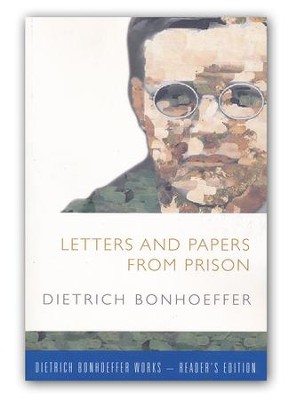
An answer may be found in the release in theaters this month of the movie, “Bonhoeffer.” The film is based on the life of the German pastor and theologian, Dietrich Bonhoeffer, executed by the Nazis in 1945. While the film highlights the dissident’s role in a plot to assassinate Adolf Hitler, the real lessons for us can be found in the years leading up to World War II.

By 1933, when Hitler was elected chancellor, Germans were well aware of his hatred of Jews. As early as 1920 he had labeled them an “alien race” and called for their “irrevocable removal.” Once in control, Hitler began the progressive persecution of Jews and other undesirables. Soon after his inauguration, he released the Aryan Paragraph, barring Jews from civil service and multiple professions. In 1935 the Nuremburg Laws stripped them of citizenship.

In November of 1938 state-sanctioned mobs brutally attacked Jews throughout Germany and its territories, destroying businesses, homes and synagogues. Ten thousand Jewish men were arrested and sent to concentration camps. By the time World War II started, the “final solution” of six million Jews throughout Europe was well underway.

From the German population, 95 percent Christian, the Nazis drew wide support, playing on anti-Semitic and nationalistic themes, heightened by propaganda and misinformation. Following Hitler’s election, one church leader wrote: ‘A fresh, enlivening and renewing reformation spirit is blowing through our German lands….The word of God and Christianity shall be restored to a place of honor.”

In 1933 Hitler appointed Ludwig Müller, an openly anti-Semitic Lutheran cleric, as Reichbishof. In this role, he was to proclaim “positive Christianity.” Mueller presided over the consolidation of the Evangelical (Lutheran) Churches of Germany, representing a majority of German Christians.

In a revision of history, the bishop claimed that Jesus was not a Jew, but an Aryan. In a statement clarifying church policy, he wrote that Jews posed a threat by bringing “foreign blood into our nation.”

One of the Mueller’s early acts was to demand that churches fire any pastors of Jewish ancestry or those married to a Jew. He also ordered all pastors to sign a loyalty oath to the Führer.

Not everyone, however, submitted to the nazification of the German Church. Dietrich Bonhoeffer and other dissidents, refused to submit to church control. In 1933 they formed the Confessing Church.

Throughout Bonhoeffer’s years as pastor, teacher, author and seminary director, he struggled to find his role in the Third Reich. While his early protests centered on preserving church autonomy, he increasingly spoke out against the Reich’s treatment of Jews. He wrote: “Only the person who cries out for the Jews may sing Gregorian chants.”

In time Bonhoeffer understood his mission as going beyond protest to political action. In 1939 he returned from the United States, where a position had been created at Union Theological Seminary expressly for his safety. Back in Germany, he joined the Abwehr, the German Intelligence agency. He was hired by his brother-in-law, Hans von Dohnanyi, on the pretense that the cleric’s many ecumenical contacts would make him an asset. Unknown to the Nazis was his brother-in-law’s role in the Resistance.

In 1943, after the Gestapo found incriminating papers, Bonhoeffer was arrested and imprisoned. On April 9, 1945, just days before American troops liberated the prison camp, he was hanged.

Bonhoeffer was not the only Christian leader to stand against Hitler. The number, however, was small. Most church leaders, including those of smaller denominations, found it expedient to accommodate Nazi ideology. Years later, Harold Alomia, a Protestant pastor and historian, would write: “God’s bride danced with the Devil.”

As we begin life under a second Trump presidency, enabled largely by the votes of white Christians, Bonhoeffer’s story is a warning of what can happen when race hatred and Christian nationalism are joined. American voters, Christian voters, please pay attention.